
What are the Benefits of Dietary fibre?
It’s recommended that we all have around 25 to 30g of fibre per day for good health. Most of us (80% of Aussie adults) don’t come close.
What exactly is dietary fibre and why do we need so much?
What is dietary fibre?
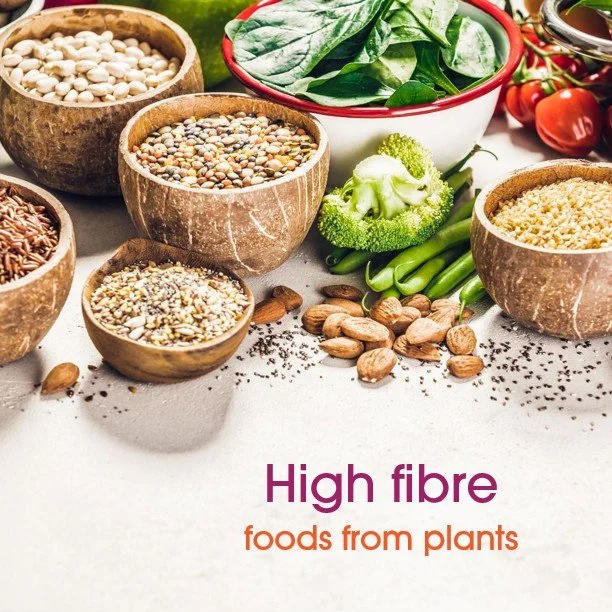
Fibre is derived from plants – specifically it is the parts of plants that we can’t breakdown and absorb from our food. It passes through the gut largely unchanged although some may be fermented by our gut bacteria.
Fibre is often split into two types:
Soluble fibre is found at high levels in oats, psyllium, PHGG, apples and pears, dissolves in water often forming a soft gel.
Insoluble fibre (or roughage) doesn’t dissolve in water. It supports the movement of material through the digestive system and adds bulk to stool. Good sources are whole grains, legumes, nuts, beans, fruit and vegetables.
It is recommended that we all have around 25 to 30g of fibre per day for good health and for most people a mix of both is good.
But why do we need so much? What are the health benefits of fibre?
Cancer prevention
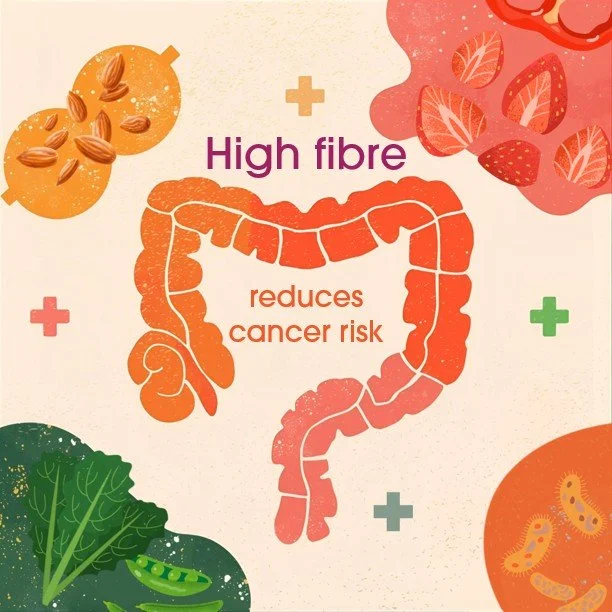
Dietary fibre reduces cancer risk through a combination of mechanical, metabolic, microbial, and hormonal pathways that together lower exposure to carcinogens, reduce inflammation, and support healthier cell function.
The strongest evidence relates to colorectal cancer, we wrote a blog about the mechanisms underpinning the effect a few months ago.
In short, fibre increases stool bulk and speeds up intestinal transit. This dilutes potential carcinogens and reduces the time that they stay in contact with the gut lining. Certain fibres also bind bile acids and carcinogenic compounds reducing their ability to damage cells in the colon.
Fermentable fibres feed beneficial gut bacteria that produce short‑chain fatty acids (SCFAs), especially butyrate, which:
Supports healthy colon cell metabolism
Reduces inflammation
Promotes apoptosis (programmed death) of damaged or precancerous cells
Improves immune surveillance
These all add up to a reduced risk of colon cancer.
Similarly, there is strong evidence that high fibre intake also reduces the incidence of breast cancer, likely by improving metabolic and hormone regulation. Fibre keeps blood glucose and insulin levels in check and the lower insulin and IGF‑1 signalling reduces cancer‑promoting pathways. Fibre helps reduce circulating estrogen by increasing its excretion. One study found that a 5% decrease in the incidence of breast cancer was linked to every 10g/day increase in total fibre consumption.
A 2025 review also found good evidence that high fibre diets are linked to a reduced risk of ovarian, pancreatic, and bladder cancers and possibly others. This is likely because high‑fibre diets are also associated with lower systemic inflammation. Chronic inflammation is a known driver of many cancers.
This effect on inflammation is likely due to the microbiome effects of the fibre, and also the fact that fibre derived from plant foods and comes packaged along with lots of anti-inflammatory vitamins and minerals and plant chemicals like polyphenols.
Gut health
Beyond colon cancer that are many other benefits of fibre for digestive health. Fibre helps food move through the gut at a healthy pace. It bulks up the stool and softens it making it easier to pass. If you struggle with constipation ,opt for a mix of both soluble and insoluble fibre. If watery stools are an issue, opt for soluble fibre options that soak up water and bulk up the stool.
If you have IBS, try to select low FODMAP, gently fermented fibre sources that are less likely to cause gas – think nuts, seeds, low-FODMAP fruit, psyllium and PHGG, rather than wholemeal wheat products.
Fibre can help with other gut conditions
Softer easier to pass stools, reduce the need for straining that can cause haemorrhoids (swollen veins in the anus and lower rectum). High fibre intake also reduces the risk of diverticulitis, which involves small, inflamed pouches in the colon wall.
Fibre and cardiovascular health
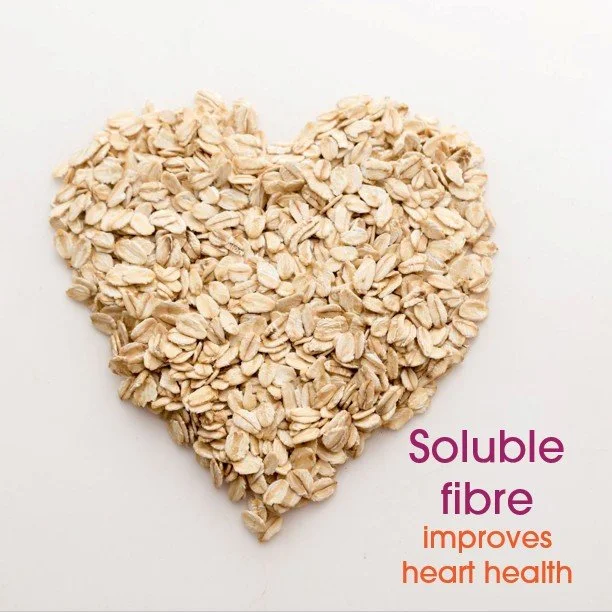
High levels of cholesterol and triglycerides in the blood are risk factors for heart disease. The soluble fibre found in oats and psyllium has long drawn attention for its ability to soak up cholesterol in the gut and change lipid levels in the blood, thus reducing the risk of coronary heart disease.
Similarly, it appears that the branched structure of PHGG, the soluble fibre we use in our Boosts and Hot Drinks, also helps to suppress fat absorption in the gut. A range of animal and human studies have demonstrated beneficial effects of PHGG on blood cholesterol and lipid levels.
Regulating blood sugar levels

As mentioned above a diet high in fibre can improve metabolic health. In people with diabetes, soluble fibre may slow the absorption of sugar and help improve blood sugar levels. And a healthy diet that includes high levels of both soluble and insoluble fibre also may lower the risk of type 2 diabetes.
Helping to maintain a healthy weight
High-fibre foods tend to be more filling than low-fibre foods. So you're likely to eat less and stay satisfied longer.
A role for the microbiome and the gut-brain axis
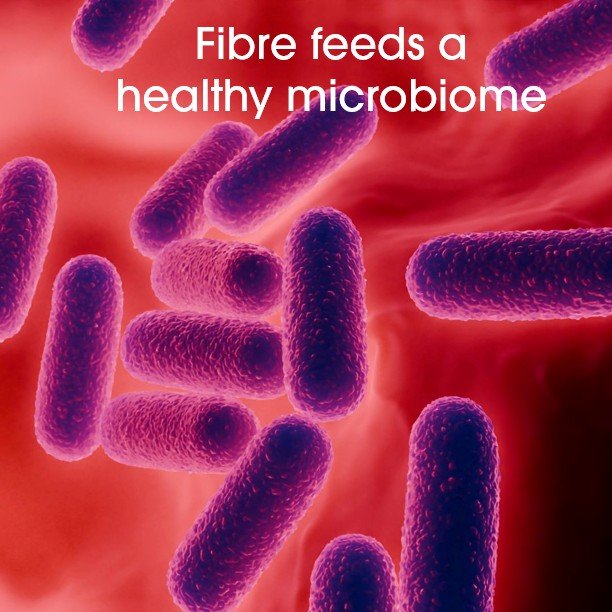
There is growing evidence to suggest that a healthy gut microbiome maintained with a high fibre diet can influence the complex interactions between the gut and the brain.
This research is in its infancy but hints at substantial interactions via the immune and hormone systems.
For example, the short chain fatty acids produced when good gut bacteria ferment fibre, downregulate the synthesis of the hunger-suppressing hormones. Other metabolites, such as the bacterial toxin lipopolysaccharide (LPS) can have negative effects, especially if they cross through a leaky gut-barrier. Some microbial metabolites may even influence neurotransmitter production.
When to reduce fibre intake
If you have Crohn’s or colitis you should reduce fibre intake during a flare up. Similarly, during a diverticulitis flare high fibre foods are not a good idea. You may also be advised to stick to a low-fibre diet immediately after a bout of gastroenteritis.
Top Tips
Start low and go slow – increase your fibre intake slowly
Increase your water intake along with your fibre, especially if you struggle with constipation
Good sources of fibre:
Whole-grains
Fruits
Vegetables
Beans, peas and other legumes
Nuts and seeds

Check out our Best Ever Poop Plan for more information on low FODMAP options and serving sizes and the best soluble and insoluble fibre sources.
The Superflora shakes, Boosts and hot drinks are a convenient way to top up your fibre.
Blog written by: Noisy Guts co-founder Dr Mary Webberley. Mary has a background in biology, with two degrees from the University of Cambridge and post-doctoral research experience.
References:
Aggarwal, B. B., & Shishodia, S. (2006). Molecular targets of dietary agents for prevention and therapy of cancer. Biochemical pharmacology, 71(10), 1397–1421. https://doi.org/10.1016/j.bcp.2006.02.009
Aune, D., Chan, D. S. M., Greenwood, D. C., Vieira, A. R., Rosenblatt, D. N., Vieira, R., & Norat, T. (2012). Dietary fiber and breast cancer risk: a systematic review and meta-analysis of prospective studies. Annals of oncology, 23(6), 1394-1402.
Yamatoya, K., Kuwano, K. and Suzuki, J. (1997) ‘Effects of hydrolyzed guar gum on cholesterol and glucose in humans’ Food Hydrocolloids, 11:239–242 https://doi.org/10.1016/S0268-005X(97)80030-6
Margolis, K. G., Cryan, J. F., & Mayer, E. A. (2021). The Microbiota-Gut-Brain Axis: From Motility to Mood. Gastroenterology, 160(5), 1486–1501. https://doi.org/10.1053/j.gastro.2020.10.066