
Peppermint: Hero or villain?
The Surprising Link Between Acid Reflux and IBS
Peppermint tea has a bit of a halo in the gut health world. Cramping? Peppermint. Bloating? Peppermint. That uncomfortable “my intestines are tying themselves in knots” feeling? Peppermint.
And for many people with IBS (Irritable Bowel Syndrome), peppermint really does help. But here’s where things get interesting. If you also live with GERD (gastro-oesophageal reflux disease), peppermint might actually make things worse. How can one humble herb soothe your lower gut but aggravate your upper gut? And what does this tell us about the deeper relationship between IBS and GERD?
Let’s dive in…
Why Peppermint Helps IBS
Peppermint contains menthol, a natural compound with anti-spasmodic properties. In simple terms: menthol helps relax muscle, including the muscles lining your intestines. IBS is strongly associated with:
Altered gut motility (things moving too fast or too slow)
Visceral hypersensitivity (an over-sensitive gut)
Cramping and spasms
Peppermint works by:
Blocking calcium channels in smooth muscle
Reducing intestinal spasms
Helping relieve abdominal pain
Clinical trials have consistently shown peppermint oil (especially enteric-coated capsules) improves IBS symptoms compared to placebo. A large meta-analysis found peppermint oil significantly reduced global IBS symptoms and abdominal pain. So yes, the peppermint love is evidence-based.
But Here’s the Twist…
Now let’s move north to the oesophagus. GERD happens when stomach acid flows back up into the oesophagus. This occurs when the lower oesophageal sphincter (LES) - the muscular valve between stomach and oesophagus - relaxes when it shouldn’t. And guess what peppermint also does? It relaxes smooth muscle, including the LES. For some people prone to reflux, peppermint can:
Reduce LES tone
Increase acid reflux episodes
Worsen heartburn symptoms
So the same relaxing effect that soothes IBS cramping may aggravate reflux. Frustrating? Absolutely. Especially because many people with IBS also experience reflux. And this is where the story gets even more interesting.
The GERD–IBS Overlap: Coincidence or Connection?
For years, researchers have observed that despite different clinical manifestations, GERD and IBS can co-occur in the same patient.
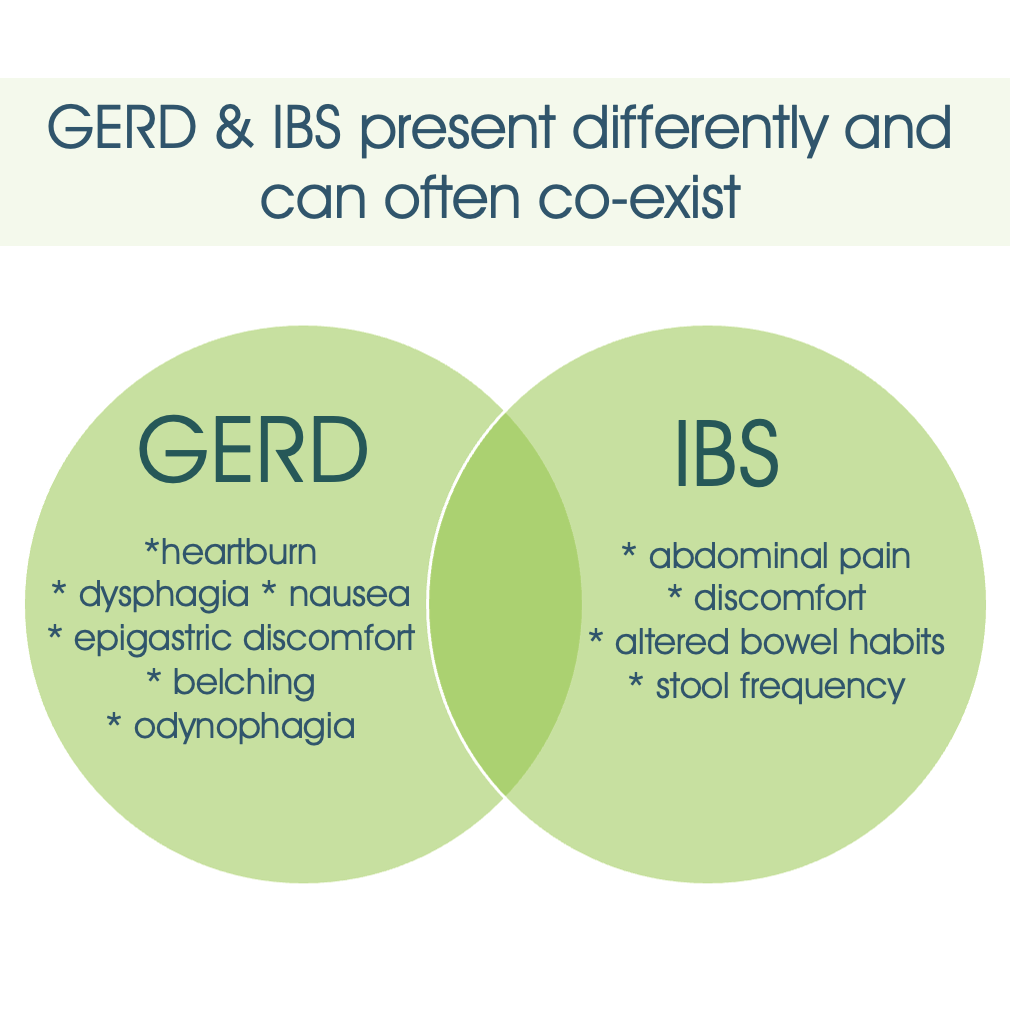
A 2024 systematic review and meta-analysis confirmed a significant overlap between the two conditions. People with GERD are more likely to have IBS and vice versa. Another 2023 study found that individuals with both conditions report significantly worse quality of life than those with just one. But until recently, one big question remained:
👉 Do they just coexist in some people… or does one actually cause the other?
This is where things get properly sciency.
A 2024 Mendelian randomisation study (Wu et al.) used genetic data to investigate causality. Mendelian randomisation is like nature’s randomised trial. Because genes are assigned at conception, researchers can use genetic variants to infer cause-and-effect relationships, reducing bias seen in observational studies. Here’s what they found:
GERD appears to increase the risk of developing IBS.
IBS did NOT appear to increase the risk of developing GERD.
In other words… the genetic evidence suggests GERD may contribute to the development or progression of IBS but not the other way around. This is important because it suggests that acid reflux isn’t just an annoying upper gut issue, it may influence lower gut dysfunction through shared genetic or physiological pathways. So when someone has both GERD and IBS, it may not be random bad luck. There may be a biological chain reaction involved.
What Does This Mean for Peppermint Tea?
If you:
Have GERD and are developing IBS symptoms
Notice peppermint helps your cramping but worsens reflux
Feel like your entire digestive tract is “overreactive”
… you are not imagining it. The upper and lower gut are deeply connected. And this raises some practical considerations.
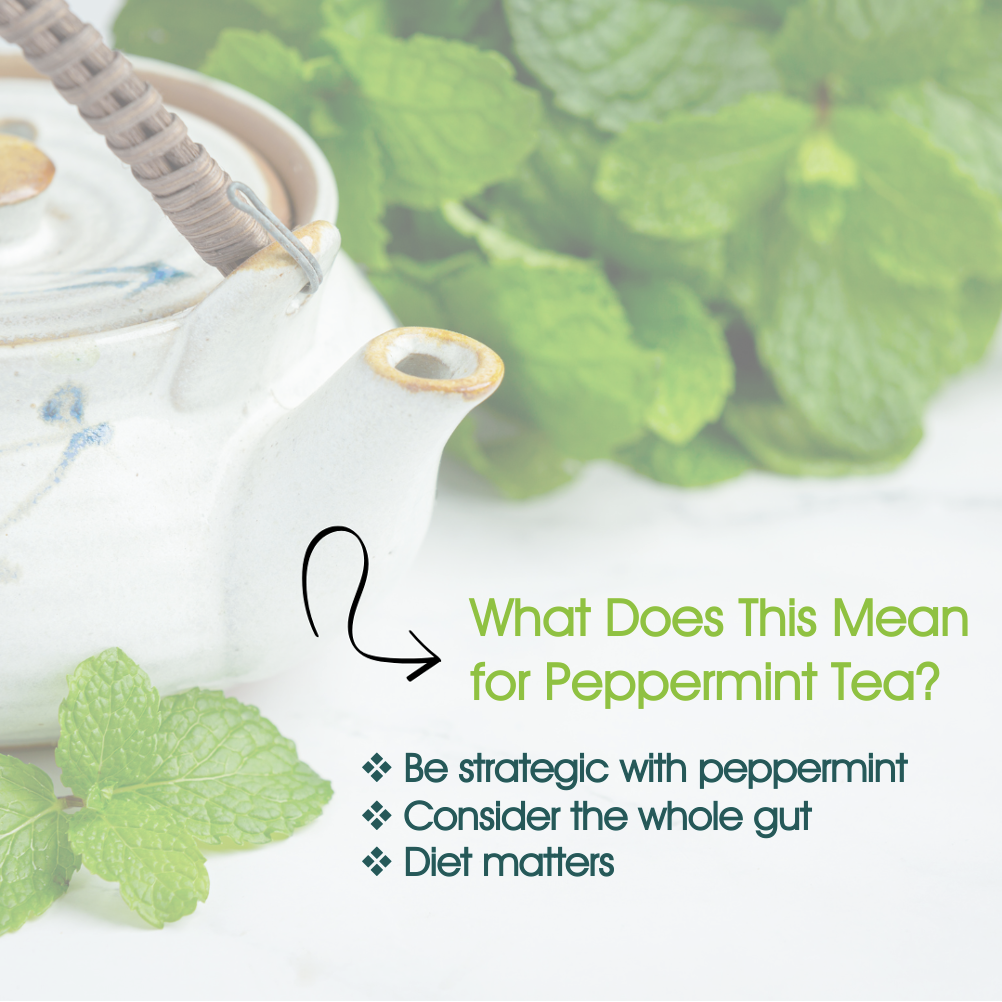
1. Be Strategic With Peppermint
If reflux is an issue:
Try enteric-coated peppermint capsules instead of tea
Avoid peppermint close to bedtime
Monitor symptom response carefully
2. Consider the Whole Gut
Treating only reflux without addressing motility and hypersensitivity may not be enough. An accredited dietitian is best placed to help you manage both conditions.
3. Diet Matters
The low fodmap diet may help IBS symptoms and emerging evidence suggests they may also reduce reflux in some people.
What about the low fodmap diet for GERD & IBS?
There is strong evidence that supports the low FODMAP for managing IBS. For GERD, evidence is emerging but promising. Why might the low fodmap diet help reflux? Fermentable carbs increase gas, increase intra-abdominal pressure and may promote transient LES relaxations. In fact, a 2022 study showed high fodmap meals WORSENED reflux symptoms compared to low fodmap meals. So the mechanism makes sense: less fermentation → less gas → less upward pressure → potentially less reflux.
While low FODMAP is not a standard GERD treatment, reducing fermentable carbohydrates may benefit people who have both reflux and IBS.
Practical Tips If You Have GERD and IBS
Eat small meals. Large meals worsen reflux.
Watch fat quantity. Not eliminate; just moderate.
Trial peppermint cautiously. Great for IBS, not always for GERD.
Trial a structured low FODMAP approach, especially if bloating accompanies reflux.
Support motility gently. Use PHGG (partially hydrolysed guar gum) to help gently regulate bowel function without aggressive fermentation.
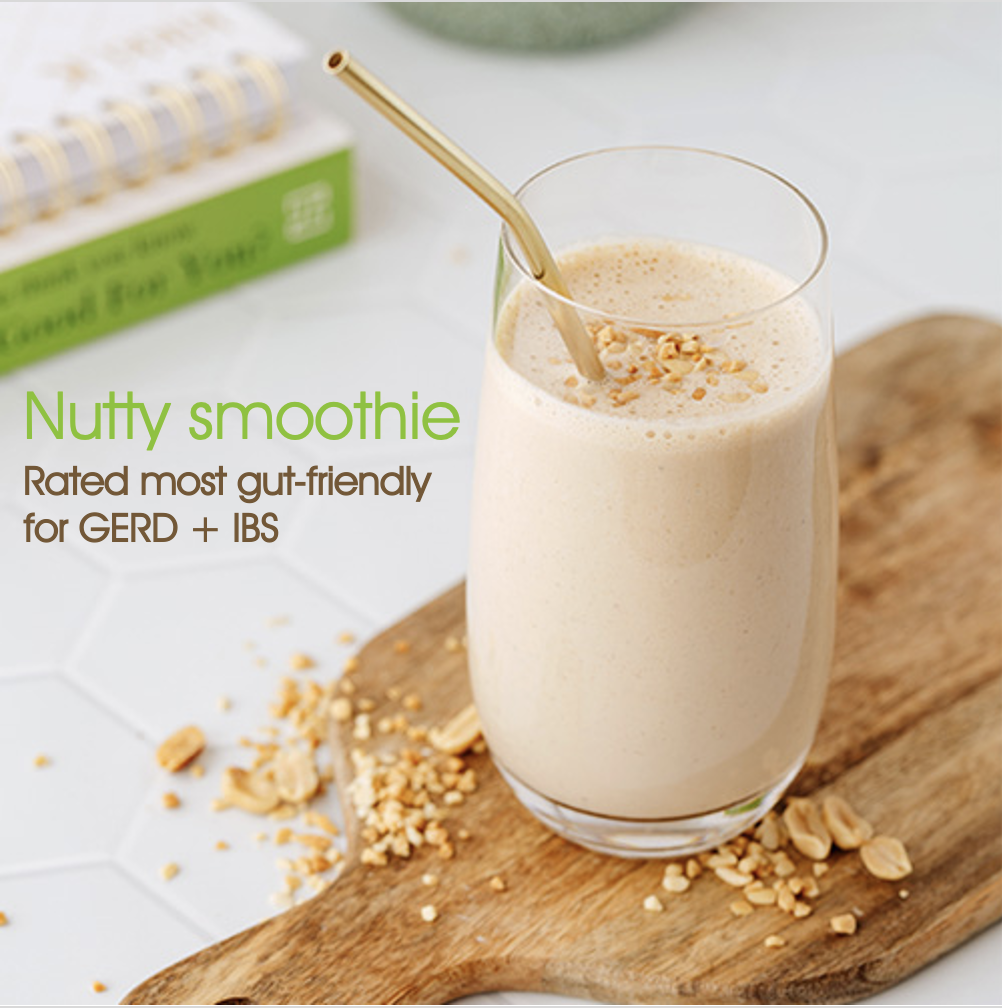
Best Smoothie for GERD & IBS
👉 Rated most gut-friendly for GERD + IBS
The Nutty Smoothie is a low-FODMAP blend of Superflora French Bean Vanilla, firm banana (within the low fodmap recommended serving size), peanut butter, walnuts, and lactose-free milk. It’s designed to be gentle on sensitive tummies and is low FODMAP when the ingredients are kept within safe serving sizes.
Why it works well for GERD + IBS:
🥛 Lactose-free base - avoids lactose issues seen in many digestive-sensitive people.
💩 Gentle fibre - PHGG helps food move through the gut at just the right pace and promotes regularity without causing bloating
🍌 Firm banana - low FODMAP and soothing rather than highly fermentable.
🥜 Healthy fats & protein - supports satiety without overly high fat loads that can slow gastric emptying (which can worsen reflux).
💪 Probiotics - helps support the gut microbiome.
Last words…
When GERD and IBS coexist, it can feel like your digestive system is working against itself. But understanding the shared mechanisms - motility, hypersensitivity, fermentation - gives us tools. And sometimes those tools are surprisingly simple: portion size, fermentable load, fibre type, and meal composition. Your gut is one continuous system. Supporting it gently, consistently and intelligently makes all the difference. And perhaps it’s a hard pass on the peppermint tea?
Blog written by: Noisy Guts co-founder Dr Josephine Muir, long-time IBS and GERD sufferer.
References:
Wu et al. (2024). Mendelian randomization analysis of the causal association between GERD and IBS.
Alshammari SA et al. (2023). Overlap Between Gastroesophageal Reflux Disease and Irritable Bowel Syndrome and Its Impact on Quality of Life. Cureus, 15(12):e50840.
Alharbi A et al. (2024). Association between gastroesophageal reflux disease and irritable bowel syndrome: a systematic review and meta-analysis. IJMDC, 8(12):3776-3783.
Khanna R et al. (2014). The efficacy of peppermint oil in IBS: a meta-analysis. Journal of Clinical Gastroenterology.
Plaidum et al. (2022). High-FODMAP diet and reflux symptoms.