
10 Easy Ways to Eat More Fibre Every Day
Dietary fibre has a myriad of health benefits: it reduces colon cancer risk, helps with regulation of blood sugar levels and weight management and can improve cardiovascular health…. and of course it helps with gut health including regularity.
But most Australians are not consuming enough fibre. The target is 25 g a day for women and 30 g a day for men. 83% of Australian adults do not meet these daily fibre requirements.
If you have IBS and are prone to bloating you’ll want to stick to slowly fermented options and that what we’ve focused on below.
Here’s 10 easy ways to add more fibre to your diet.
Add in wholegrains
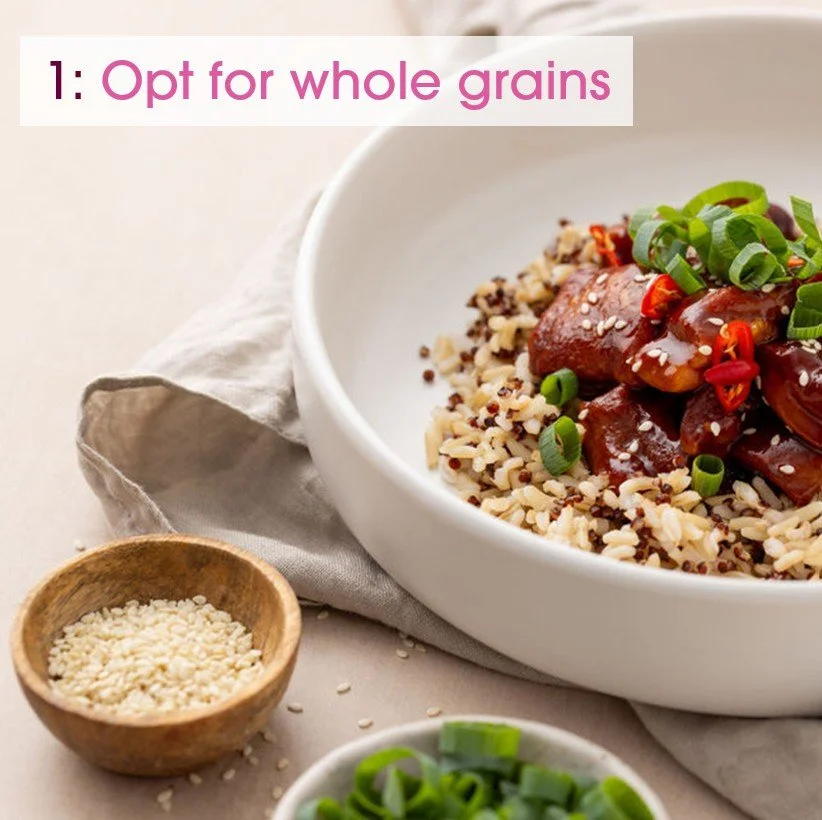
Yes, the fructans found in whole meal bread can be an issue in bread, but there is a low FODMAP serving size.
You can have 1 slice of whole meal bread. Top it with some avocado, hummus or peanut butter to increase it’s fibre content.
Not a fan of wholemeal bread? that’s fine - try quinoa or brown rice instead.
Low FODMAP serves and their fibre content
Brown rice (cooked) 1 cup has 3.5 g of fibre
Wholemeal bread 1 slice has 1.9 g of fibre
Psyllium 7 g has 5.5 g of fibre
Quinoa (red, white or black) 1 cup has 5 g of fibre
In comparison 1 cup of cooked white rice has only 0.6 g of fibre
2. Throw berries on your breakfast…

It doesn’t matter if it is porridge, yoghurt or granola, berries up the fibre content and add delicious flavour.
Low FODMAP serves and their fibre content
1 cup (125 g) of Blueberries has 3 g of fibre
1/3 cup (58g) of Raspberries has 3.8 g of fibre
5 medium Strawberries (65g) has 1 g of fibre
3. Chia seeds are another great addition to breakfast
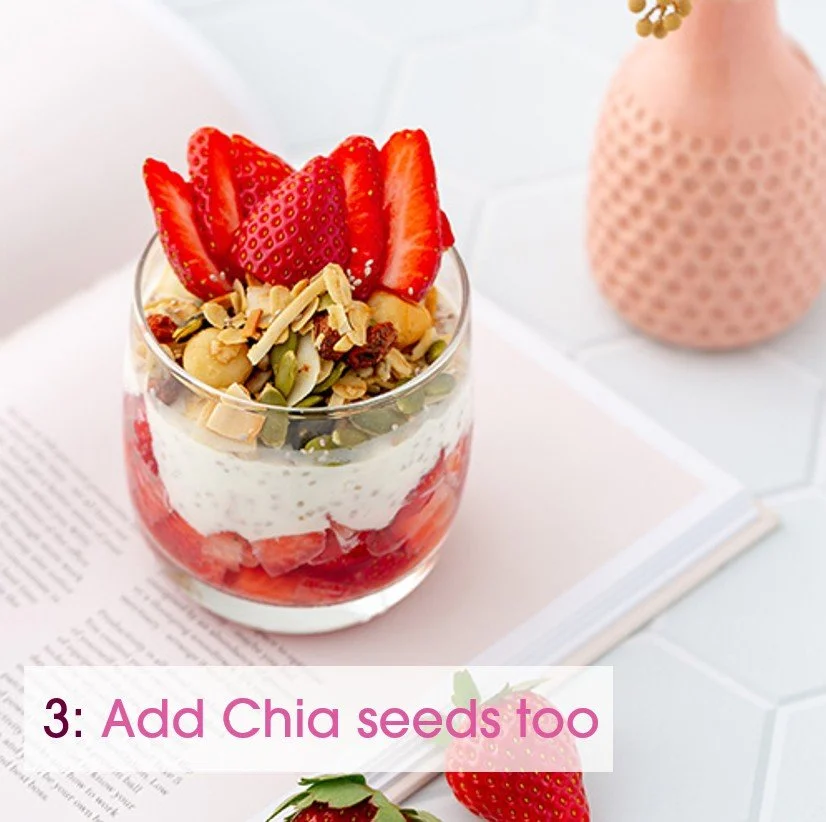
I add always chia seeds to my porridge, and overnight oats, but chia seeds do need a bit of help.
We couldn’t make chia seeds taste good and then we worked out that it is all about what you mix them with. For delicious Chia Pots mix with your favourite lactose-free yoghurt, maple syrup and kiwifruit or berries.
They also work really well in porridge or overnight oats, or even these gooey chocolate puddings.
Two tbsp of chia seeds provide 10 g of fibre and it is a really fabulous form of fibre. It soaks up water to form a soft gel that bulks up and softens the stool making it very easy to pass. The fibre in chia seeds is also non-fermentable, which means it won't cause lots of gas or bloating that can be problematic for people who suffer from IBS.
4. Have two kiwifruit a day – before bed if you want to sleep well
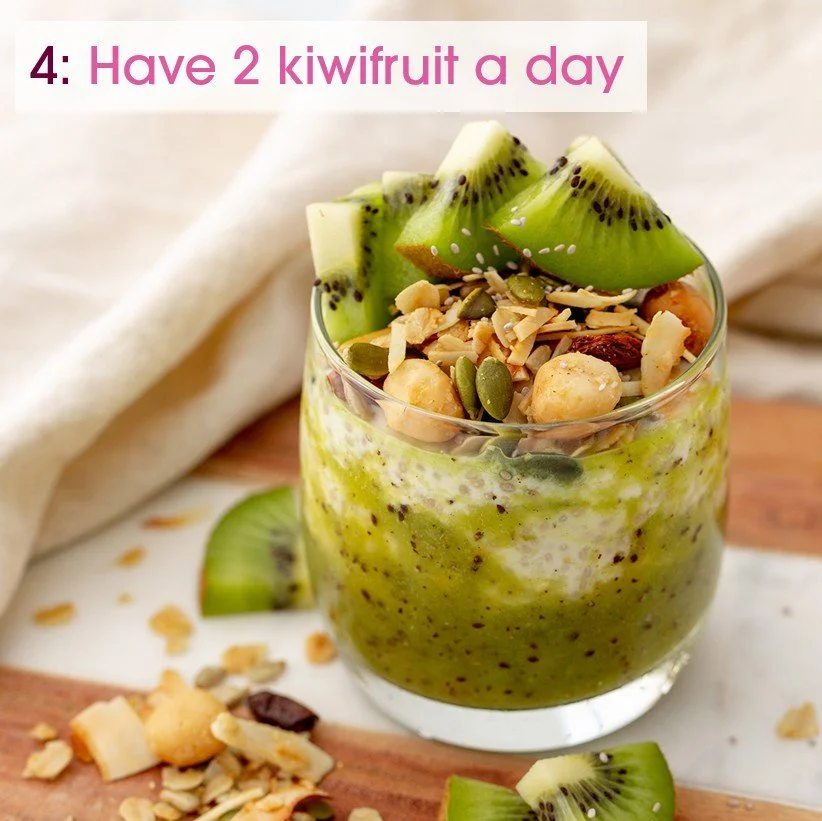
Kiwi fruit are a good source of both soluble and insoluble fibre and there have been several clinical studies demonstrating the benefits of kiwi fruit for people struggling with chronic constipation
New research indicated that they may also help to improve sleep.
The green kiwifruit have slightly more fibre than the golden kiwifruit – two peeled green kiwi provide 4g of fibre.
The slightly sweeter, golden kiwi fruit have less – 2 g of fibre in 2 peeled fruit, but if you eat the skin, it goes up to 3g.
5. Add legumes to lunch… or dinner

Always throw ¼ cup in a salad, soup, stew, poke bowl or curry.
Make sure you use the canned options and rinse and drain well to remove the FODMAPs that leach into the canning water. You may want to build up your legume intake over a few weeks, but aim to end up have be having some every day, or twice a day.
Low FODMAP serves and their fibre content
Chickpeas (canned & drained) 1/4 cup has 3 g of fibre
Kidney beans (canned & drained) 86 g has 5 g of fibre
Lentils (canned & drained) 1/4 cup has 4 g of fibre
Black beans (canned & drained) 40 g has 3.5 g of fibre
Green beans 75g has 2.5 g of fibre
Edamame beans (shelled) 75g has 3.75 g of fibre
6. Oats for breakfast
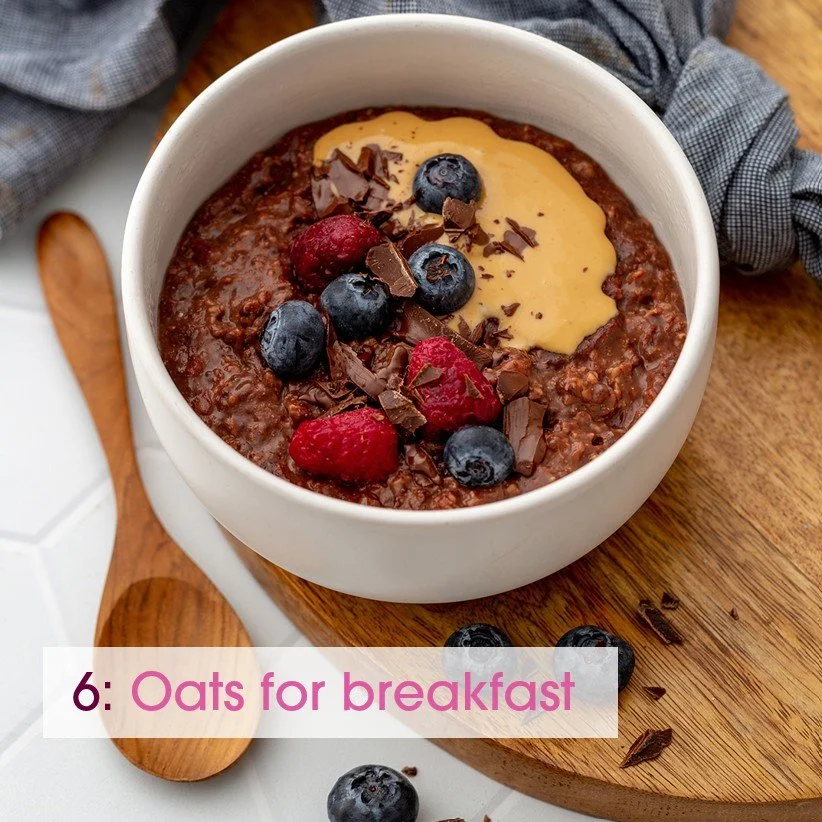
This is a staple in my house. Hot for porridge in winter, cold in overnight oats for summer and as a key in gradient in granola all year round.
Oats also combine really well with chia to provide you with an even better headstart on your fibre tally for the day.
Half a cup of oats is low FODMAP and provides a whopping 8.2 g of fibre.
Oats are rich in a type of soluble fibre called beta-glucan. It is gel-forming in the gut and great for softening and bulking up the stool as well as feeding good gut bacteria. It is helpful for people with either constipation or diarrhoea.
Beta-glucan can also help stabilise blood glucose levels and reduce absorption of cholesterol.
7. Choose a fibre rich snack
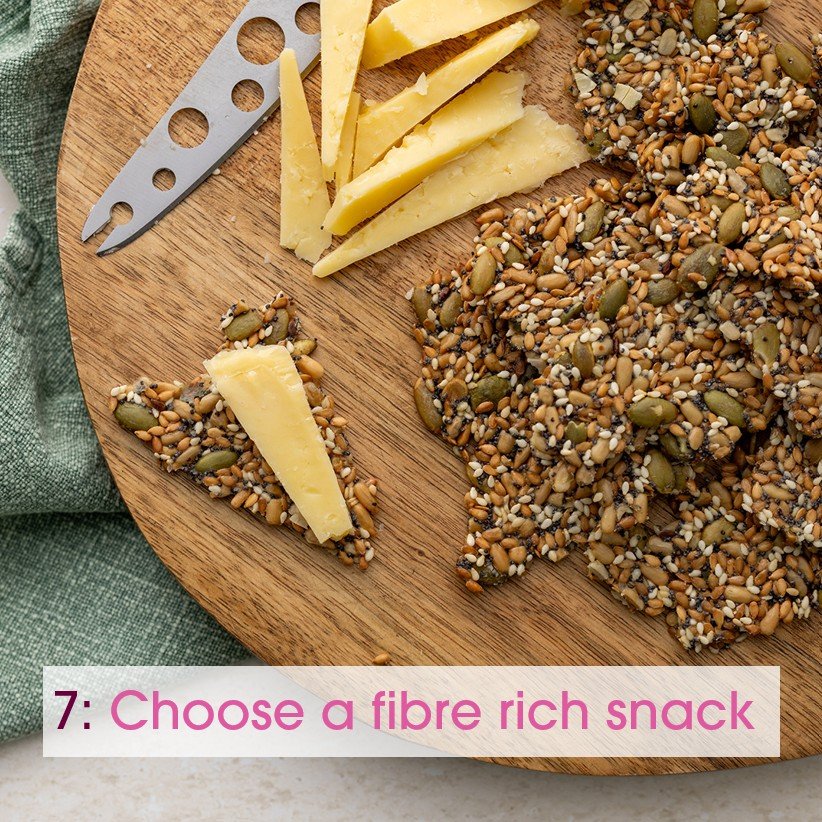
Try seeded crackers and cheese, carrot sticks and some hummus, protein balls, or my favourite lactose-free yoghurt and berries.
Mid afternoon we all get hungry, but making that snack fibre-packed will help carry you though to dinner. We have recipes for seeded crackers, and hummus, and these are our favourite protein balls – you can probably work out the yoghurt and berries yourself!
8. Grab a handful of nuts or seeds
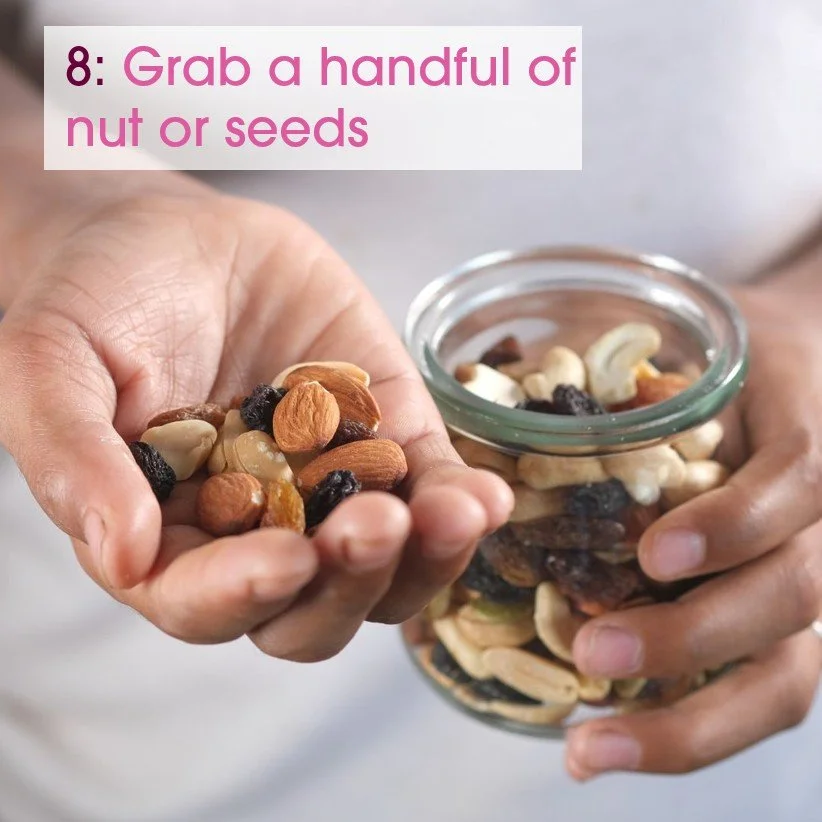
These are another snack option that you can quickly grab to top up your fibre.
Aim for a small, cupped handful each day - Regular daily consumption of a 30g portion of nuts is linked to a lower risk of heart disease, improved cholesterol, and better metabolic health.
Low FODMAP serves and their fibre content
Walnuts 30 g has 2.1 g of fibre
Almonds 12 g has 1.4 g of fibre
Macadamia nuts 40 g has 3.6 g of fibre
Pecans 20 g has 2 g of fibre
Hazelnuts 15 g has 1.5 g of fibre
Chestnuts (roasted) 84 g has 4.2 g of fibre
Sunflower seeds (hulled) 2 tsp have 0.5 g of fibre
Pumpkin seeds (pepitas) 2 tbsp have 4 g of fibre
Sesame seeds 1 tsp has 1 g of fibre
9. Eat more fruit and vegetables AND leave on the skin

The berries and kiwifruit are fabulous options. But here are the low FODMAP serves of other fruit and vegetables that are also have a good amount of fibre.
Low FODMAP serves and their fibre content
High Fibre Fruit
Orange - 1 medium has 3 g of fibre
Green banana - 1 cup has 3 g of fibre
Papaya - 140 g has 3.22 g of fibre
Avocado - 3 tbsp has 4 g of fibre
Dragon fruit - 1 medium (330g) has 10g of fibre
Passionfruit pulp (2 medium) has 4g of fibre
Add an array to your shopping trolley and try to have at least one of these each day.
Keep the peel on your veggies. A super easy way to up your fibre is to have a baked potato with lunch or dinner a couple of times a week. A large baked potato is low FODMAP and has 7g of fibre. It’s fabulous with a Mexican Chilli.
But you can also these options to up your fibre intake
Low FODMAP serves and their fibre content
Veggies
Carrots 1 medium has 2.1 g of fibre
Spinach 2 cups have 1.5 g of fibre
Lettuce 2 cups have 2 g of fibre
Sweet potato 1/2 cup has 2.25 g of fibre
Broccoli (heads only) 75 g has 1.8 g of fibre
Kale 1/2 cup has 3 g of fibre
Kent pumpkin (up to 500g) 75 g has 1.9 g of fibre
Red capsicum - 43 g has 1 g of fibre
Eggplant 1 cup has 2.2 g of fibre
Spring onions (green tops) 1 1/2 cups has 1.9 g of fibre
10. Add extra fibre to your baking
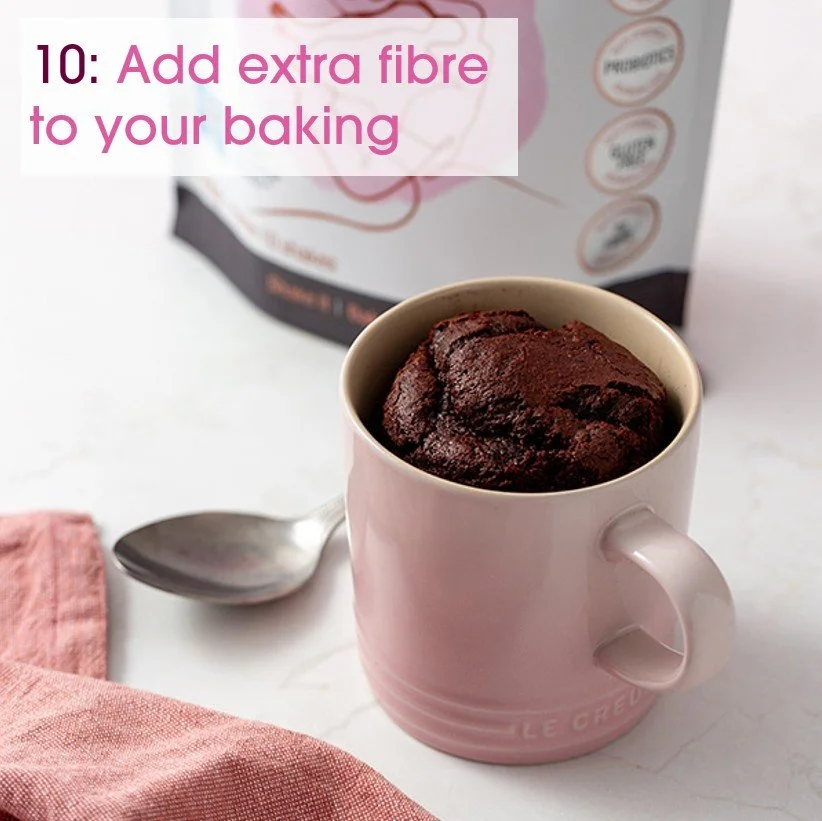
Swapping out some of the gluten-free flour for blitzed oats, nuts or buckwheat flour ups the fibre content.
Try these fabulous mug cakes or blueberry crumble.
Finally…
If you are currently way off target with your fibre intake, you’ll want to start low and go slow…and also increase your water intake too.
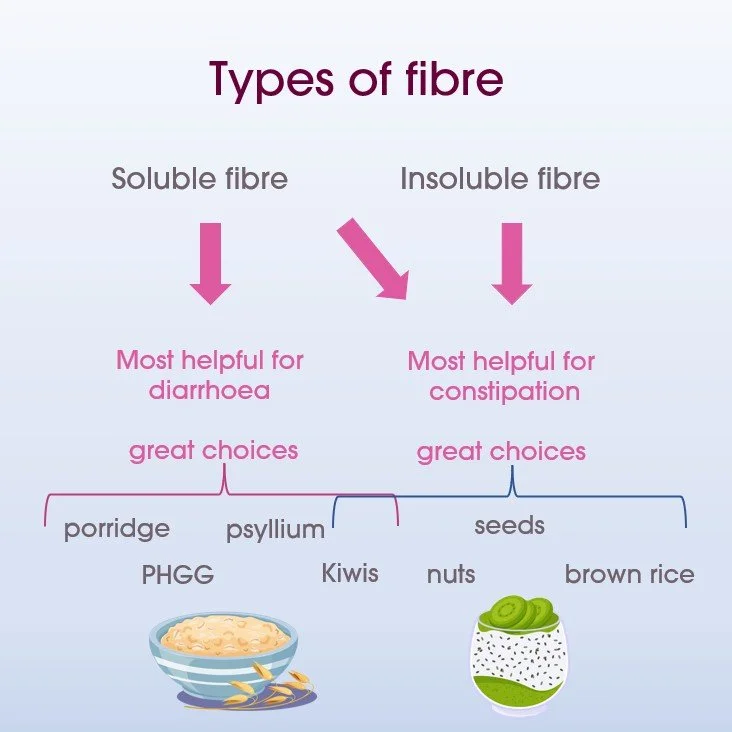
You may need to focus on different types of fibre depending on you gut’s motility type.
If things are moving to slow and you have constipation, optimal results come from a mix of both soluble and insoluble fibre. Fruit and vegetables have a mix of both, and whole grains, and seeds are a good sources of insoluble fibre.
If diarrhoea is your problem, you’ll want to stick to soluble or gel-forming fibre - oats, Partially Hydrolysed Guar Gum (PHGG) and psyllium are good sources.

And if you still can’t meet your target, the Superflora range provides a convenient way to add low FODMAP gentle fibre to your diet.
The hot drinks, Boosts and Biome Builder all have at least 5g of fibre from PHGG - a prebiotic fibre that feeds good gut bacteria and also helps to normalise the poop and restore regularity (without the rush). The shakes have a combo of psyllium, PHGG, ground chia and linseeds adding up to 7g.
Written by: Noisy Guts co-founder Dr Mary Webberley. Mary has a background in biology, with two degrees from the University of Cambridge and post-doctoral research experience. Her main strategy for hitting her daily fibre intake target is to load up her breakfast with high fibre ingredients - oats, chia, berries and nuts.