
The Striking Link between ADHD and Gut Problems
Scientists have gathered increasing evidence of a multiple two-way links between the brain and the gut and the gut microbiome. It is perhaps unsurprising then that clinical studies have shown distinct microbiome profiles in neurodivergent groups. Similarly, gut problems have been well documented in autistic people. And review last year showed that ADHD is associated with 25% higher rates of IBS, inflammatory bowel disease, peptic ulcers and coeliac disease.
Until now, however, researchers have had a less complete picture of how frequently more broadly defined gastrointestinal symptoms occur in ADHDers.
That changed this week, with publication of a major new systematic review in the Journal of Attention Disorders.
It has delivered one of the clearest pictures to date of how common gut symptoms are in people with ADHD. The scale of the work was remarkable. Twenty-three studies across eleven counties were included, representing over one point nine million participants. The findings are striking. ADHDers experience gastrointestinal symptoms far more often than neurotypical peers.
This review highlights correlation rather than causation. We cannot say that ADHD causes gut symptoms, or vice versa. But the pattern is strong, consistent and important for both patients and their doctors to understand.
What the Review Found
All included studies involved participants with a formal ADHD diagnosis and reported gastrointestinal symptoms such as constipation, flatulence, dyspepsia, encopresis, diarrhoea, abdominal pain and unspecified stomach/bowel issues. Irritable bowel syndrome (IBS) was also an outcome for multiple papers, as was “all GI symptoms”.
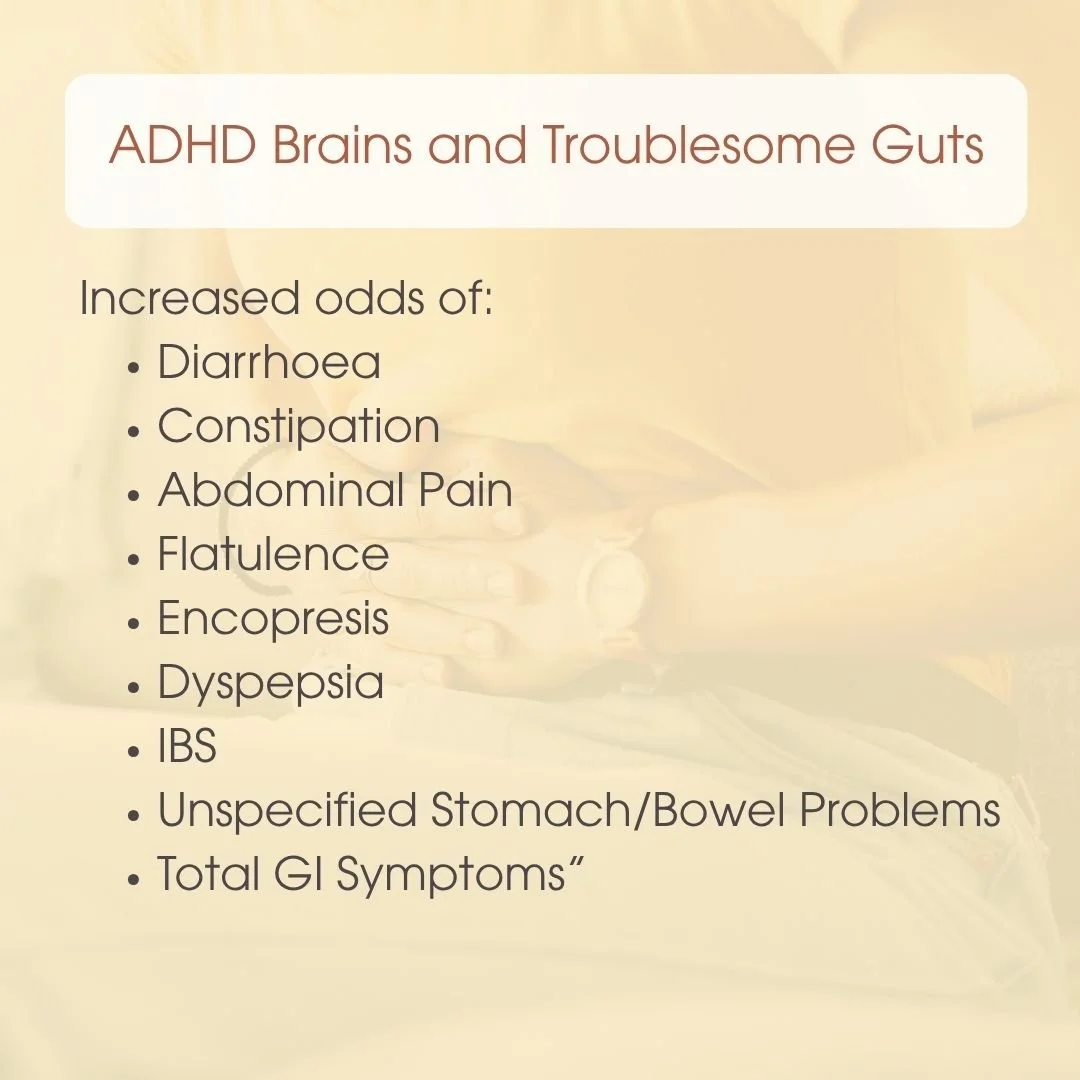
Across the studies, ADHD was consistently linked with higher rates of gut symptoms.
Key results included:
Total gastrointestinal symptoms were forty eight percent more common in ADHD cohorts
Constipation was almost twice as common
Irritable bowel syndrome was fifty eight percent more common
Diarrhoea was more than twice as common
Abdominal pain was eighty eight percent more common
Encopresis was more than four times more common
One line from the review captures the overall picture: “ADHD was associated with increased odds of every gastrointestinal symptom investigated.”
These findings appeared across child and adult studies and across diverse countries. They do not prove causation, but they do show a pattern that is too consistent to ignore.
Why Might ADHD and Gut Symptoms Be Linked
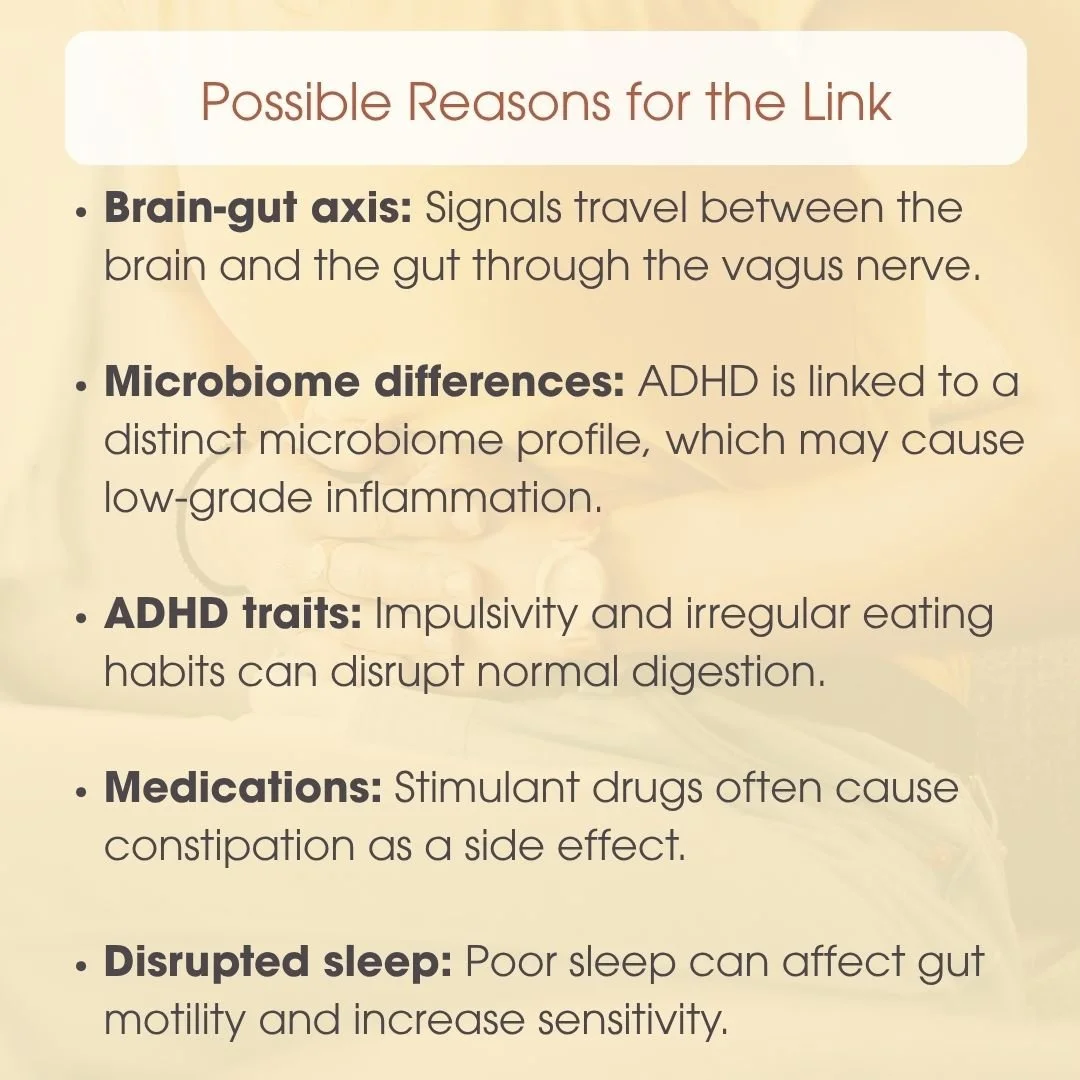
The review outlines several possible pathways. None of these are proven causes, but they offer clues that may help explain the pattern.
Eating patterns and sensory factors
Many ADHDers experience irregular eating routines. Skipped meals, late meals or impulsive eating can influence gut motility and contribute to dyspepsia, bloating or constipation. Sensory sensitivities to texture or smell can lead to selective eating and low fibre intake.
Stress and emotional regulation
Emotional dysregulation and heightened stress reactivity are common in ADHD. These factors can increase visceral sensitivity and make abdominal pain more likely.
Medication effects
Stimulant medications can reduce appetite or cause nausea and abdominal discomfort. Most studies did not separate medicated and unmedicated participants. This makes it particularly important for future research to distinguish whether gut symptoms are intrinsic to ADHD or a side effect of treatment.
Sleep disruption
Sleep problems are common in ADHD and can influence gut motility and immune function. Poor sleep can heighten gut sensitivity and contribute to irregular bowel habits.
Gut microbiome differences
Several studies have shown that people diagnosed with ADHD have different gut microbial profiles compared with neurotypical controls. Gut dysbiosis can activate the gut immune system and contribute to inflammation. This inflammation can drive symptoms such as constipation, diarrhoea and abdominal pain.
Shared biological pathways
Genetic studies have found overlapping pathways between IBS and mood or anxiety disorders. ADHD often coexists with anxiety which may help explain why gut sensitivity is common in ADHD.
What This Means for People With ADHD
For anyone living with ADHD and gut symptoms, these findings may feel validating. Many people have long suspected a connection. This review shows that the link is real, even though the exact cause is not yet known.
It also highlights an important message. Gut symptoms in ADHD are not rare and should not be dismissed. They deserve proper assessment and care.
Hopefully, better awareness can lead to earlier support and improved quality of life.
Practical guidance
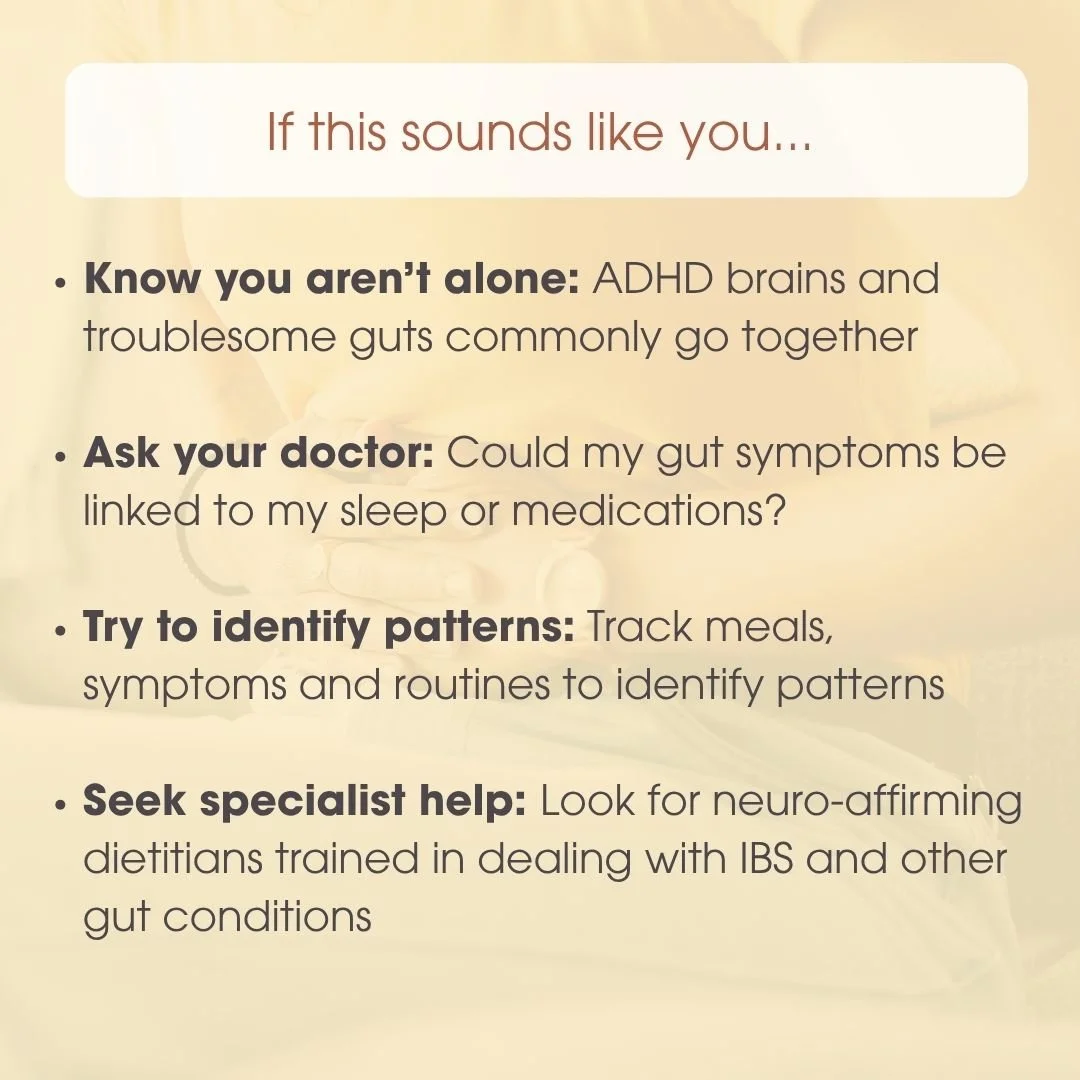
If you live with ADHD and experience gut symptoms, bring them up with your doctor
Ask whether your symptoms could be influenced by medication, diet, stress or sleep patterns
Seek support from specialist health professionals such as gastroenterologists or dietitians if symptoms are persistent
Track meals, symptoms and routines to identify patterns
If sensory sensitivities affect diet, a dietitian familiar with neurodivergent eating patterns can help build a fibre friendly plan that feels manageable
As awareness grows, hopefully patients will find it easier to have their gut symptoms taken seriously and to access multidisciplinary support.
Why This Matters for the Gut Brain Conversation
The gut brain axis is a growing area of research. This review adds weight to the associated idea that neurodivergence and gut function are closely connected.
Further research is needed to untangle which comes first the GI symptoms and a dysregulated gut or whether they emerge because of ADHD or it's treatment.
The Bottom Line
This systematic review provides strong evidence that ADHD is associated with a higher prevalence of gastrointestinal symptoms. The pattern is consistent and striking. It does not prove causation, but it does show that gut symptoms in ADHD are common and should not be dismissed.
If you have an ADHD brain and gut symptoms, reach out to a health professional who understands both. Neuro-affirming dietitians trained in dealing with IBS and other conditions are likely to offer more flexible approaches than the typical rigid elimination diets.
Written by: Noisy Guts co-founder Dr Mary Webberley. Mary has a background in biology, with two degrees from the University of Cambridge and post-doctoral research experience.
References:
Blake, S., et al. (2026). The Association Between Attention-Deficit Hyperactivity Disorder and Gastrointestinal Symptoms: A Systematic Review and Meta-Analysis. Journal of Attention Disorders, 0(0). https://doi.org/10.1177/10870547261469626
Ng R. W. Y., et al. (2025). Association between attention-deficit/hyperactivity disorders and intestinal disorders: A systematic review and meta-analysis. Scientific Reports, 15, Article 1927819278. https://doi.org/10.1038/s41598-025-04303-x
Jakobi B., et al., (2024). The gut-microbiome in adult Attention-deficit/hyperactivity disorder - A meta-analysis. European Neuropsychopharmacology, 88, 21–29. https://doi.org/10.1016/j.euroneuro.2024.07.004