Low FODMAP Autumn Produce Guide 2026
What’s in Season for IBS‑Friendly Eating
Our autumn 2026 low fodmap guide breaks down what’s in season at Australian fresh food markets right now, using the latest update from the Sydney Markets and the Monash University Fodmap App, to determine the serving sizes you need for gut‑friendly Autumn cooking.
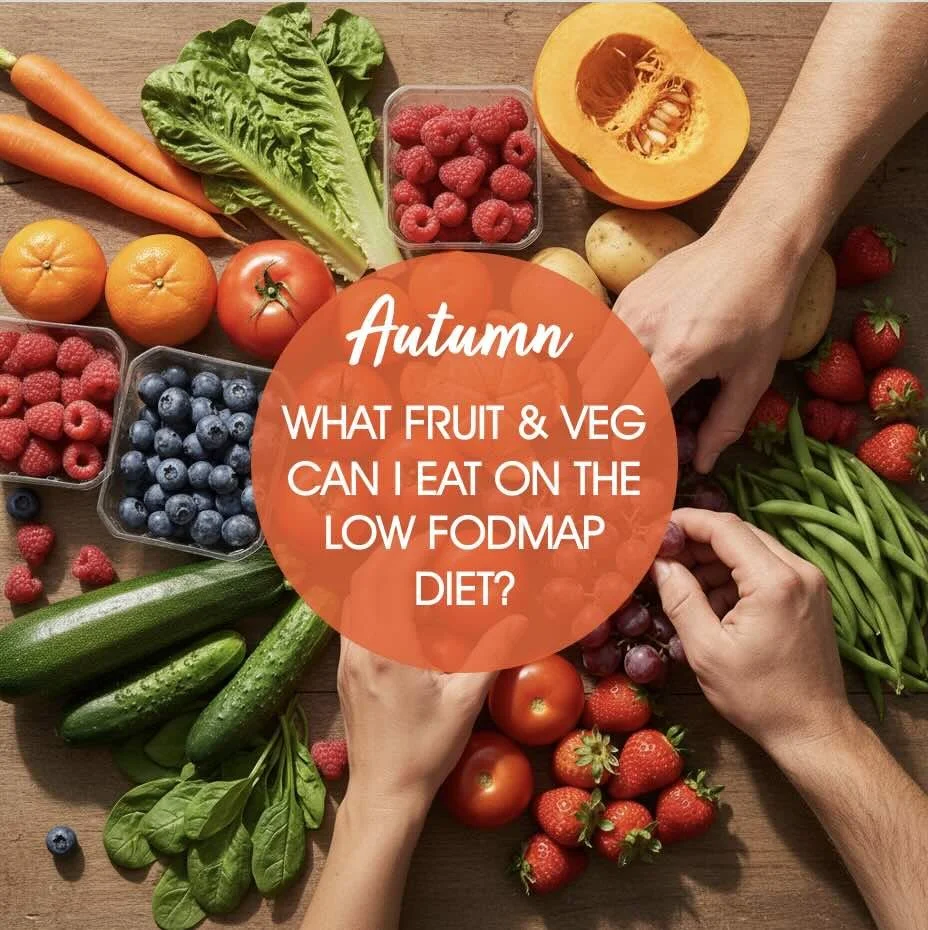
Why Seasonal Eating Matters for IBS and Gut Health
As we shift into Autumn, most of us feel the seasonal change long before the leaves start falling, especially if you’re living with IBS. Cooler mornings, warmer dinners and an instinctive nudge toward comfort foods can all affect how your gut behaves. That’s why each season we look at what’s in peak supply at Australian farmers’ markets and match it with the evidence‑based low fodmap serving sizes from the Monash University Fodmap App (and Fodmap Friendly when there’s a notable difference). Seasonal produce tastes better, costs less and gives your microbiome a far more diverse nutrient profile - all wins for gut health.
This week’s Sydney Market report shows a colourful mix of fruits and veg arriving in great quality. Below is our breakdown of what’s gut-safe, what’s great in small amounts, and what to approach with caution if you’re following a low fodmap diet.
Low fodmap Autumn Fruits in Season
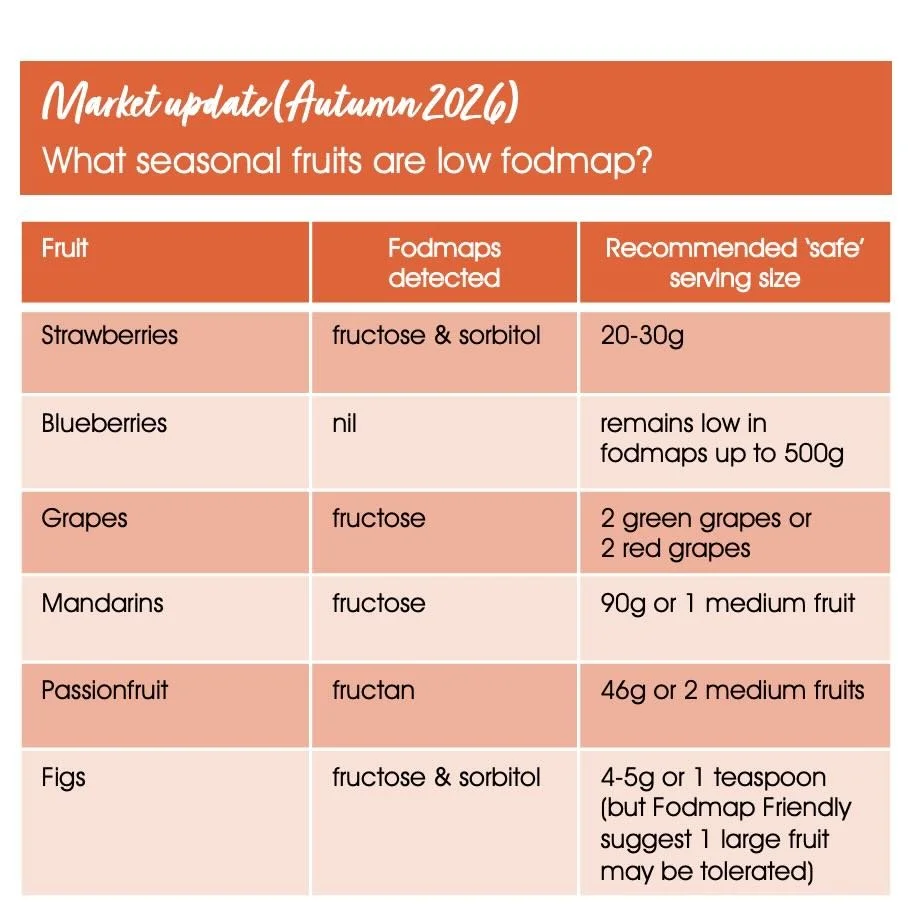
Strawberries: Strawberries continue to shine this week - sweet, firm, and full of antioxidants. Monash low fodmap serving is 65g, roughly 5 medium berries.
Blueberries: Blueberries are excellent quality and well‑priced at the moment. Monash low fodmap serving size is 125g (1 cup). Blueberries stay low fodmap even at larger serves, so they’re one of Autumn’s safest bets for IBS‑friendly snacking. Try these blue chia pots!
Grapes: Crisp and seedless red and green grapes are abundant this week. I even found black finger grapes at the markets last weekend. Monash low fodmap serving size is 15g (or 3 green grapes). It surprises many people, but grapes quickly jump to high fructose at higher portions, so go easy. Fodmap Friendly lists a higher low‑fodmap serve than Monash, which is worth knowing if you tolerate fructose reasonably well. They also suggest a low fodmap serving size of 25g (or 6 medium grapes) for black grapes. But be wary - grape prices are on their way up!
Mandarins: Early‑season mandarins are starting to appear. Monash low fodmap serving size is 90g (1 medium mandarin) - a great lunchbox option.
Passionfruit: High‑quality passionfruit is still available in good numbers. Monash low fodmap serving size is 46g (or 2 medium fruits) so great to add to your brekkie cereal or chia pot.
Figs: My neighbour’s tree is heaving with this year’s fig harvest but once again, I can only admire from a distance. Figs are very high in fructose, making the recommended low fodmap serving size just 7g. according to Monash. However, Fodmap Friendly lists a recommended serving size of 1 large fruit so maybe it’s worth testing your tolerance level!
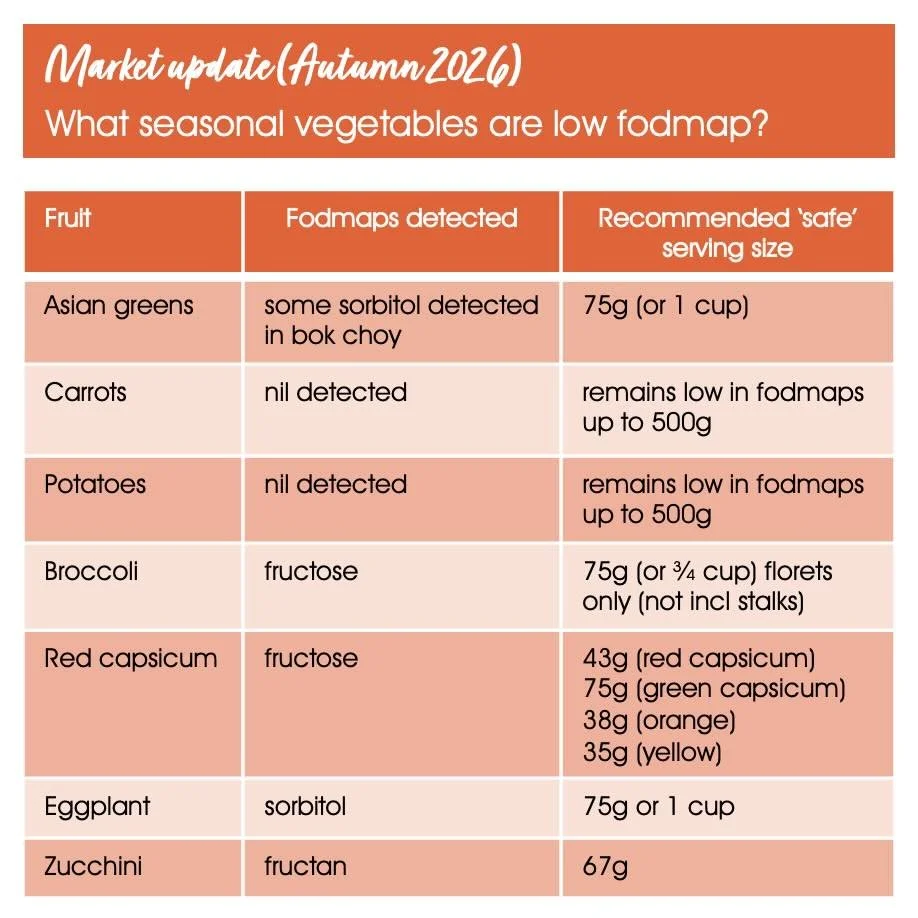
Low fodmap Autumn Vegetables in Season
Asian greens: Bok choy (75g), choy sum (75g) and gai lan (75g) are all low fodmap at 1 cup. These are nutrient‑dense and gentle on digestion, plus great in stir fries.
Carrots: Carrots are low fodmap even in large serving sizes. great cooked or raw. Have you tried our carrot, kale and halloumi salad yet?
Potatoes: Potatoes are also low fodmap in large serving sizes, but have you seen a price increase near you? Any white, brushed or washed potatoes are fine and there’s no different in fodmap content between white or red potatoes. These hassleback potatoes are a winner with my kids!
Broccoli: Broccoli heads are low fodmap at 75g (or 3/4 cup) when you limit the stalks. Stalks contain more fructose than florets, so including stalks decreases how much you can tolerate.
Capsicum: Capsicums contain capsaicin, a natural ingredient which gives it a spicy flavour. It can trigger heartburn and abdominal pain in some individuals with IBS. However this is not fodmap related. Monash low fodmap serving size is 43g or 1/2 cup (red), 75g or 1 cup (green), 38g or 1/2 cup (orange) or 35g or 1/2 cup (yellow).
Eggplant: Eggplant is low fodmapp in moderate amounts. Monash low fodmap serving size is 75g.
Zucchini: Zucchinis are everywhere. Monash low fodmap serving size is 67g which is only about 1/4 of a cup.
Diversity, colour, and moderate portions
Autumn is one of my favourite seasons to cook for gut health. The produce is vibrant, generous, and naturally aligned with the warm, comforting meals we all start gravitating towards. Seasonal eating helps your gut, helps your wallet and, as with any change, helps you to increase your plant diversity. We’ll keep translating the science (so you don’t have to) and bringing you practical, delicious ways to support your gut health every day. To kickstart your menu planning for the week, click on the pics below for these yummy recipes.