
Is Slow Cooking Good for IBS and Gut Health?
As soon as the weather turns, my slow cooker comes out! The reality in my household is that the slow cooker never has time to go into hibernation. I find it a great tool for batch cooking or for creating delicious dinners with surprisingly little effort. Plus, who doesn’t love throwing meat & veg into a slow cooker before work and returning home feeling like a domestic goddess? But… I recently saw a slow cooked honey garlic chicken recipe on social media and found myself slipping down a rabbit hole. Is slow cooking actually good for your gut health? And the more I researched, the more questions I found myself asking like:
Is it really safe to cook chicken in a slow cooker?
What’s the relationship, if any, between IBS and food poisoning?
What happens to the nutrients in vegetables if I cook them for 8 hours?
Does slow cooking make FODMAP content better… or worse?
And how can I make honey garlic chicken suitable for people following the low fodmap diet?
As it turns out, the answers are surprisingly interesting.
Is Slow-Cooked Chicken Safe to Eat?
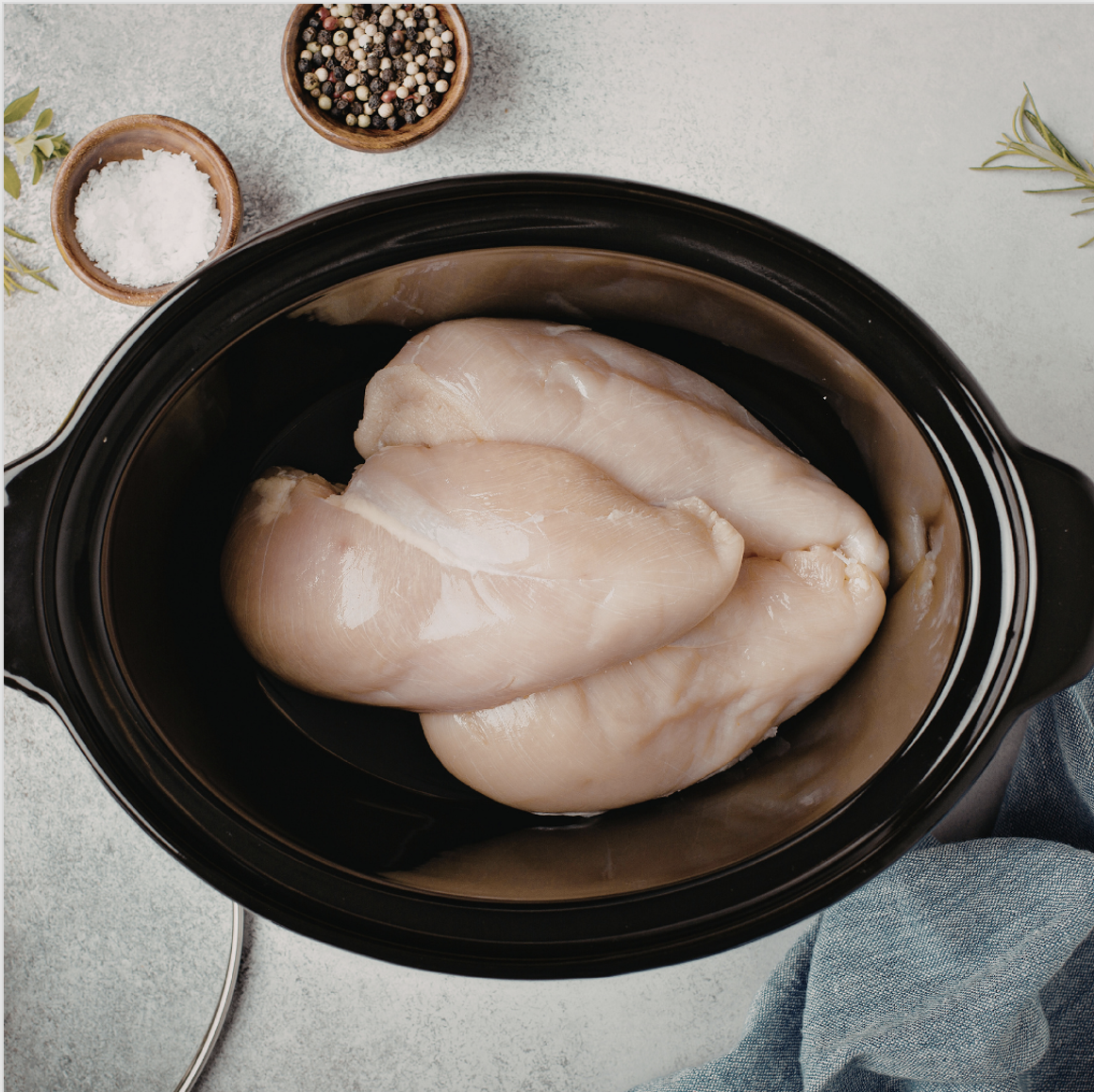
Slow cookers are a trusted appliance in many Australian households but is slow-cooked chicken safe to eat?
Let’s tackle the slightly anxiety-inducing question first and yes, this is where I slipped down the rabbit hole. According to FSANZ, there is NO poultry producing country that has been able to eliminate Salmonella and Campylobacter from raw chicken. Salmonella and Campylobacter are the two main bacteria that are present in raw chicken and cause illness if the chicken isn’t cooked or handled correctly. A baseline survey conducted in 2008 (updated Nov 2011) to see whether live and slaughtered chickens in Australia are contaminated with harmful bacteria found positive results at all three points along the chicken meat supply chain: on-farm, just before processing and at the slaughtering process.
Yep, I told you it was a bit grim. But… bacteria is killed by heat. FSANZ recommends that poultry (whole cuts, roast or mince), along with all meat that has been minced or rolled, be cooked to at least 75°C in the centre.
But… unless you have a thermometer, it’s hard to know for sure if your slow cooker is hitting the right temperature (and how long does it take to hit that temperature?) Google says that the low temperature setting on an average slow cooker sold in Australia maintains a temperature around 87°C while the high temperature setting reaches 149°C. I found it curious that reading the User Manual of a bog-standard slow cooker from Kmart mentioned NO temperature settings. At all. It just gave guidelines for how long to cook different proteins at the low and high settings.
But here’s where it gets even more interesting… even if your dusty ol’ slow cooker gets to these temperatures, bacteria can multiply very quickly if food is kept in the temperature danger zone of 5-60°C. And that’s why it’s recommended to cook chicken first to get it up to temperature and preheat your slow cooker so that it doesn’t take hours to get up to the required temperature.
So to avoid food poisoning, a cooking thermometer is your best friend. And to avoid the cooking danger zone, you should avoid:
❌ cooking chicken from frozen, straight from the fridge or without browning or precooking first
❌ overfilling your slow cooker
❌ opening the lid every 20 minutes (“just checking!”)
❌ cooking for too short a time on low heat (for example, the User Manual for the Kmart model mentioned above suggests cooking a whole chicken (2-3kgs) for 6 hours at low setting or 4 hours at high setting
❌ using an old or faulty slow cooker (but how old is old? And how do I know if my “old” slow cooker is still fit-for-purpose?)
Can Undercooked Chicken Affect Gut Health?
Here’s where things get really interesting for people with IBS.
Undercooked chicken can expose you to foodborne bacteria that cause food poisoning or gastroenteritis. And for some people, gut symptoms don’t necessarily end once the food poisoning does. Researchers have identified something called Post-Infectious IBS (PI-IBS) where symptoms such as: bloating; tummy cramps; diarrhoea; constipation; urgency; or food sensitivity can continue weeks, months or even years after a stomach infection. In fact, studies suggest between 4-36% of people may develop lingering IBS symptoms after food poisoning or gastroenteritis. Ever heard someone say: “My gut was never the same after Bali Belly”? Turns out… there may be some science behind that. So yes, cooking chicken properly matters for everyone, but especially if you already have a sensitive gut.
Is Slow Cooking Good for IBS?
Here’s the answer you probably weren’t expecting: for many people with IBS, slow cooking may actually be gentler on digestion. Why?
1. Vegetables become softer and easier to digest
Some raw vegetables can be hard work for sensitive guts. Slow cooking softens plant fibres, which some people with IBS find easier to tolerate. Think about the difference between:
🥕 Crunchy raw carrot salad
vs
🥕 Soft slow-cooked carrots in a casserole
For many IBS sufferers, the second option feels noticeably gentler.
2. Meat becomes more tender
Tough cuts of meat soften during slow cooking, making meals easier to chew and digest.
3. Warm cooked meals can feel less aggravating
Many people with IBS report better tolerance to warm cooked foods versus cold, raw meals, especially during symptom flare-ups. Of course, IBS is frustratingly individual. One person’s “gut healing comfort meal” is another person’s bloating disaster.
But Wait… What Happens to Vitamins in Slow-Cooked Vegetables?
This is where things get nuanced. Yes! Some vitamins can decline during long cooking. The main nutrients affected are water-soluble vitamins, including:
Vitamin C
Folate (Vitamin B9)
Some B vitamins
These nutrients are more sensitive to heat and water, meaning they can break down or leach into cooking liquid over long periods. Before you dramatically side-eye your slow cooker…there’s good news too.
Slow cooking doesn’t automatically mean “nutrient loss”. Some nutrients actually become more available after cooking. For example:
🍅 Tomatoes: cooking increases availability of lycopene (an antioxidant)
🥕 Carrots: beta carotene becomes easier to absorb
And because slow cooker meals often include sauces, broths or cooking liquid that gets eaten, some nutrients remain in the meal rather than being poured down the sink.
So the takeaway? Slow cooking changes nutrients. It doesn’t necessarily destroy them.
The BIG Low FODMAP Catch: Garlic & Onion
Now for the part many IBS sufferers don’t realise. Sadly…you can’t just fish garlic or onion out of a slow cooker after cooking and call it Low FODMAP. Why? Because the FODMAPs in garlic and onion (fructans) are water soluble. That means they leach into:
sauces
soups
casseroles
stocks
slow cooker liquids
Over hours of cooking, those fructans spread throughout the whole dish. So if you’re making a slow cooker meal for IBS or the Low FODMAP diet, swapping ingredients matters. Instead of garlic and onion, try: garlic-infused olive oil; green tops of spring onion; lots of fresh herbs; asafoetida powder (although you may be aware by now that this isn’t my favourite ingredient so proceed with caution!); and FODMAP-friendly stocks (of which I have many favourites so do email me if you want any recommendations) 😀
So… Is Slow Cooking Good for Gut Health?
Overall? For many people with IBS, slow cooking can be a gut-friendly way to cook, with a few caveats about food safety. Slow cooking may help because:
✅ Meals are softer and easier to digest
✅ Warm cooked meals may feel gentler during flare-ups
✅ Tough meats become more tender
✅ It encourages home cooking over takeaway
Watch-outs for IBS:
⚠️ Garlic and onion FODMAPs can spread through cooking liquid
⚠️ Rich creamy sauces may trigger symptoms for some people if they’re high in saturated fats
⚠️ Food safety matters! COOK YOUR CHICKEN PROPERLY!
Low FODMAP Slow Cooker Honey Garlic Chicken
Because no gut-health article should end without dinner inspiration. Traditional slow cooker honey garlic chicken recipes are usually packed with honey + garlic (aka two things many IBS sufferers don’t love. Sigh…). So I set out to create a gut-friendlier version using clever swaps to keep all the sticky, comforting flavour without the tummy drama. And because my slow cooker is a hundred years old AND I don’t yet have a food thermometer AND I just don’t have time for a food poisoning, I stuck to the oven. You can find the recipe here. It’s delicious AND made in the one dish - win win!
The Bottom Line
Slow cooking can absolutely fit into an IBS-friendly, Low FODMAP lifestyle, as long as you pay attention to ingredients and food safety.
And if your gut’s been feeling fragile lately?
A warm, soft, comforting meal might just be exactly what it ordered. And yes, since writing this I have now bought myself a shiny new cooking thermometer, so you can absolutely bet that I’ll be reporting back to you about cooking temperatures in my slow cooker!
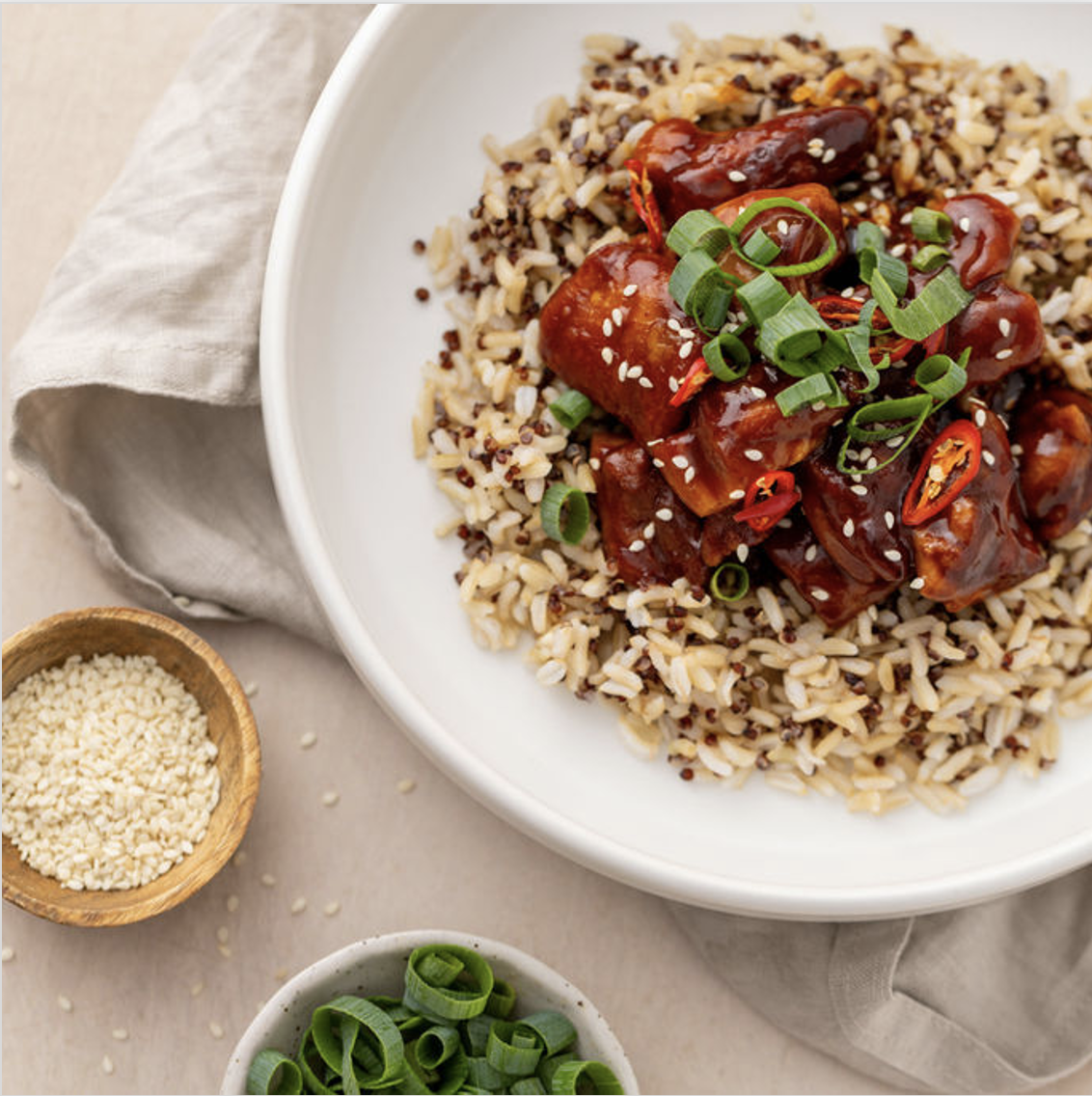
Sweet & sticky low fodmap chicken