
How Your Gut Microbiome Changes on Different Diets
This week we are looking at a huge review published earlier this year that looked at 80 clinical trials to understand how different diets affect the gut microbiome.
We’ve been wanting to cover this research for a while, partly because it is the work of mainly Australian researchers (from Deakin and La Trobe Universities) and partly because it was so comprehensive: The review pulled together research on changes over time for 13 different diets:
The Mediterranean diet, Western diet, Japanese, Korean, Nordic diets, Low FODMAP diet, Ketogenic diet, Gluten free diet, Calorie restricted diets, Macronutrient altered diets (high/low fat, protein, carbohydrate), Animal based and plant based diets, High fibre, high polyphenol, and psychobiotic diets.
Each of the included studies examined the gut microbiome of participants at the beginning of the study and then again after several weeks of the diet to see what had changed. A study with this kind of design cannot prove causality, but does indicate relationships that can be investigated further.
Many study also looked at the metabolites produced by the microbiome and biochemical and physiological changes in the participants.
The findings were interesting.
The big takeaway? Diets definitely change the gut, but not always in the ways people expect…it is most useful to look at changes in specific bacterial groups and the chemicals they produce.
But let’s look in more detail at the results.
Most diets don’t appear to dramatically change overall gut diversity
Researchers expected to see big shifts in “microbial diversity,” but the results were all over the place. Some studies indicated that the diets increased diversity, some indicated that they decreased it, it appears that overall most don’t change it at all
And that’s okay.
Whilst it’s generally believed that greater diversity is a sign of a healthier gut microbiome. Diversity per se isn’t always a sign of good health, it depends on the context. For example, some disease such as HIV /AIDs result in high diversity.
Also measuring diversity is a diverse science in itself - different studies employed different methods, which may have confounded the results. And it’s likely that the degree of change would depend a lot on the starting diet of the participants and how much that differed from the diet they switched to for the duration of the study.
What did change consistently were specific groups of bacteria, the chemicals they produce and their health effects, which matter far more.
The Mediterranean diet came out looking great
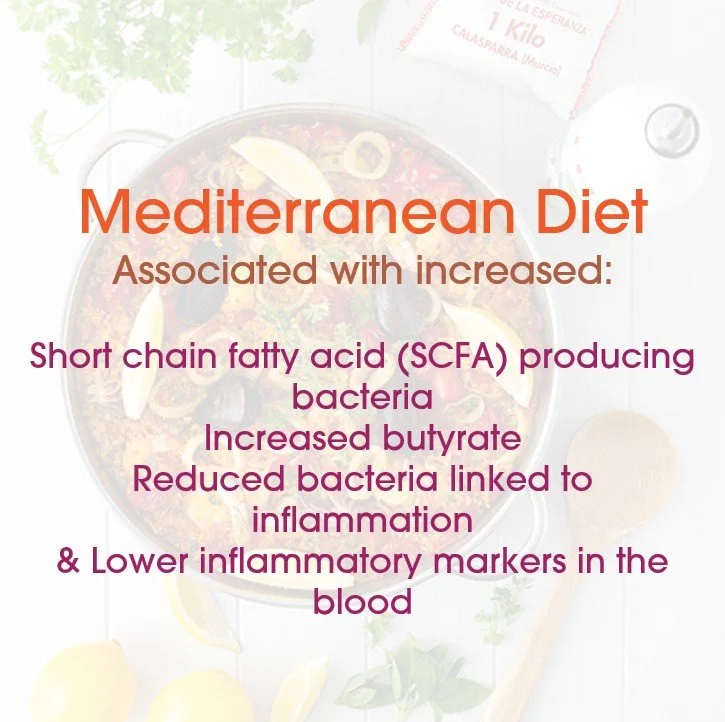
One diet really stood out.
Across many studies, the Mediterranean diet:
Increased beneficial, short‑chain‑fatty‑acid (SCFA) producing bacteria*
Boosted butyrate (a key anti‑inflammatory compound)
Reduced inflammatory markers in the blood
Reduced bacteria linked to inflammation
It’s rich in fibre, polyphenols, and healthy fats - basically everything your gut microbes love.
*As a reminder – we get excited about SCFAs because they have many health benefits, such as anti-inflammatory, immunoregulatory, anti-obesity, anti-diabetes, anticancer, cardiovascular protective, hepatoprotective, and neuroprotective activities.
Other diets also increased SCFA producing bacteria or other beneficial bacteria: these were the Japanese, Korean, Plant‑based, Low‑fat, Low‑protein, High‑polyphenol and High‑fibre diets. These diets often increased Faecalibacterium prausnitzii, Anaerostipes, Bifidobacterium, and other SCFA or lactic‑acid producers.
Low FODMAP works for symptoms, but lowers SCFAs
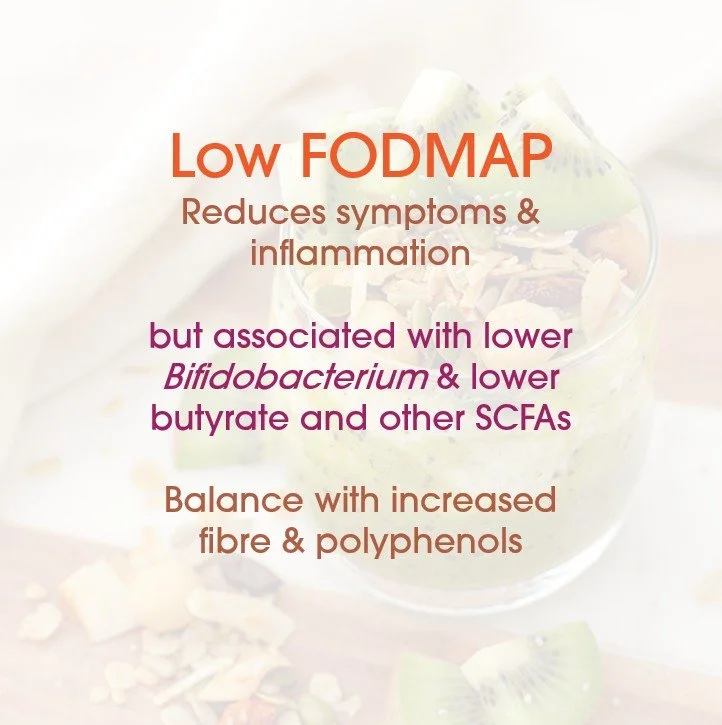
The low FODMAP diet helps IBS symptoms by reducing fermentable carbs.
But those carbs are also what feed SCFA‑producing bacteria.
So the diet often leads to:
Lower Bifidobacterium (a beneficial taxa)
Lower butyrate and other SCFAs
Less gut inflammation (a good thing!)
This is why the exclusion phase of the low FODMAP should be short‑term, and be followed by reintroduction of the FODMAPS you can tolerate.
It’s also wise to add in fibre and polyphenol rich food – watch this space, we have something launching next week that can really help with this.
Other diets associated with reduced beneficial bacteria
The Ketogenic, Gluten‑free, Western and Animal‑based diets were also associated with lowered SCFA‑producing species and reduced beneficial bacteria . Western diets also increased inflammatory markers.
High‑fibre and plant‑based diets help—but not always in the way people expect
These diets usually increase beneficial bacteria, but surprisingly, some studies showed lower SCFAs in stool. That doesn’t mean the gut is worse off - your body may simply be absorbing more SCFAs, which is actually good.
They also were associated with improved:
Blood sugar
Cholesterol
Inflammation
Polyphenols (berries, extra virgin olive oil, herbs, cocoa) are quiet gut heroes
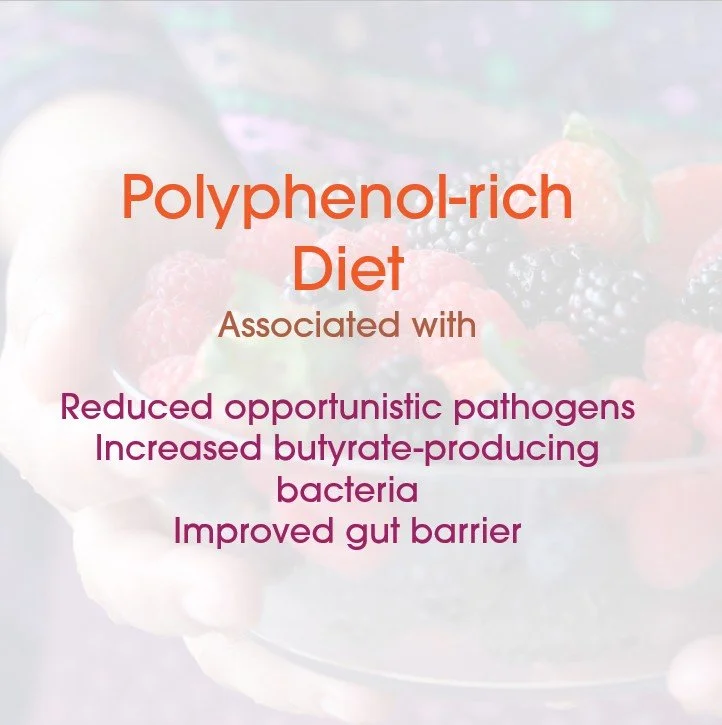
We were delighted to discover that some of our favourite foods are associated with positive effects.
Across the studies a high‑polyphenol diet was associated with :
Increased butyrate‑producing bacteria
Reduced potentially harmful bacteria
Improved gut barrier markers (zonulin)
Polyphenols act like “microbial fertiliser” and pair beautifully with fibre.
Some of the biggest changes weren’t in bacteria - they were in metabolites
Across diets, the most meaningful shifts were in:
SCFAs (gut anti‑inflammatories)
Inflammation and immune markers - Mediterranean, low FODMAP, gluten‑free, low‑fat, and high‑fibre diets were associated with reduced inflammatory markers such as CRP, IL‑6, IL‑8, TNF‑α.
Bile acids - Animal based diets were associated with increased bile acids
Amino acid metabolites
Lipid levels - High‑fat diets were associated with increased saturated fatty acids and inflammatory markers
Gut barrier markers - Polyphenol‑rich diets were associated with improved gut barrier markers (reduced zonulin)
This is where diet really influences health.
What this means for you and your gut
If you’re doing low FODMAP:
It’s great for symptoms and reduces gut inflammation, but pair it with fibre and polyphenol reintroduction to restore SCFAs.
A gluten-free diet is essential for coeliac disease:
But again try to add in gluten-free fibre and polyphenols.
If you want long‑term gut health:
A Mediterranean‑style pattern is the most consistently beneficial. That means eating whole grains, lots of legumes, garlic, lots of vegetables and fruit, plus fish, nuts and seeds and extra virgin olive oil, traditionally fermented vinegar, and low levels of red meat. This can be tricky to combine with the Low FODMAP diet (especially the garlic and legumes) but check out this blog for tips.
If you want to support your microbiome:
Focus on adding in fibre + polyphenols (berries, nuts, olive oil, herbs, cocoa, colourful veg). Our Best Ever Poop plan has examples of lot of low FODMAP sources of fibre including the Superflora range.
If you’re plant‑based:
You’re feeding the right bacteria - again just make sure you’re getting enough fermentable fibre.
This is just general advice, talk to your doctor if you have a medical condition. In addition to specialist diets being helpful for coeliac disease and IBS, special diets may be more helpful in some other cases for example:
The ketogenic diet is best for seizure control
A low protein diet is beneficial in kidney disease
The DASH diet is helpful to reduce high blood pressure.
Sometimes a low‑carb or calorie‑restricted is best for severe metabolic syndrome
Blog written by: Noisy Guts co-founder Dr Mary Webberley. Mary has a background in biology, with two degrees from the University of Cambridge and post-doctoral research experience.
Reference:
Aslam, H., Trakman, G., Dissanayake, T. et al. Dietary interventions and the gut microbiota: a systematic literature review of 80 controlled clinical trials. J Transl Med 24, 39 (2026). https://doi.org/10.1186/s12967-025-07428-9