
Building a winter gut health toolkit
The mornings are getting cooler, blankets are making their way back onto the couch, and across Australia the temperatures are slowly starting to dip. It’s not quite winter yet (as Mary keeps reminding me)… but it is the perfect time to do some prep ahead of the oncoming cold and flu season.
If you’ve been paying attention to the news lately, you may have noticed something. There’s been a lot of talk about respiratory infections again - flu, COVID, RSV - and what this winter might look like.
And while no one wants to panic, there are a few important signals worth knowing about, especially if you live with IBS or a sensitive gut. Because winter illness doesn’t just affect your lungs. It often affects your gut too. Let’s dive in.

What the data is showing so far in 2026
Right now, COVID rates in Australia are relatively low and stable compared to previous years. In fact, the just released surveillance report shows that COVID-19 cases increased in January but remain lower than at the same time in previous years. After a late increase in influenza cases in 2025, cases decreased in January but have now returned to interseasonal levels.
Australia experienced one of the biggest flu seasons on record in 2025, with more than 500,000 confirmed cases nationwide. And a fast-spreading influenza strain, nicknamed “Super-K”, is still circulating (influenza A H3N2 subclade K).
Health experts are watching closely because:
the strain spreads quickly
vaccine uptake dropped last year
late-season flu activity persisted longer than usual
That unusual pattern is why health authorities are encouraging people to prepare early this year. Early data suggests the 2026 season may return to a more typical pattern and potentially be shorter and less severe than last year. But preparation still matters. Because winter illness doesn’t arrive overnight. And neither does resilience.
Why this matters if you have IBS
Most people think of winter illness as coughing, fever and sore throat. But if you have IBS, you probably know the reality can be this and more. Even a regular head cold can trigger diarrhoea, constipation, bloating and gut sensitivity (especially if you’re surviving on throat lozangers, cold & flu tablets and mum’s garlic-laden chicken soup).
And sometimes, the problem isn’t the infection itself. It’s everything - disrupted sleep, irregular meals, more comfort food and did I mention those horrid flu meds that 100% make my constipation worse?! And if you’re wandering into your local pharmacy without your glasses, here’s a practical rule to follow - if it’s swallowed whole (think cold & flu tablet), it’s usually low fodmap. But… if it’s sweet, chewable or liquid, check the label for sorbitol and mannitol.
The Gut–Immune System Connection
Around 70–80% of your immune cells live in your gut, in specialised immune tissue called GALT (gut-associated lymphoid tissue). Your gut is constantly:
monitoring microbes
responding to infections
regulating inflammation
protecting your gut lining
This is why gut health plays such a central role in how your body responds to illness. Not just whether you get sick but how well you recover. But every winter, a similar pattern emerges. As temps go down, we tend to eat fewer fresh fruit and veg, drink less water and move less. While unintentional, the result is less food for our gut bugs.
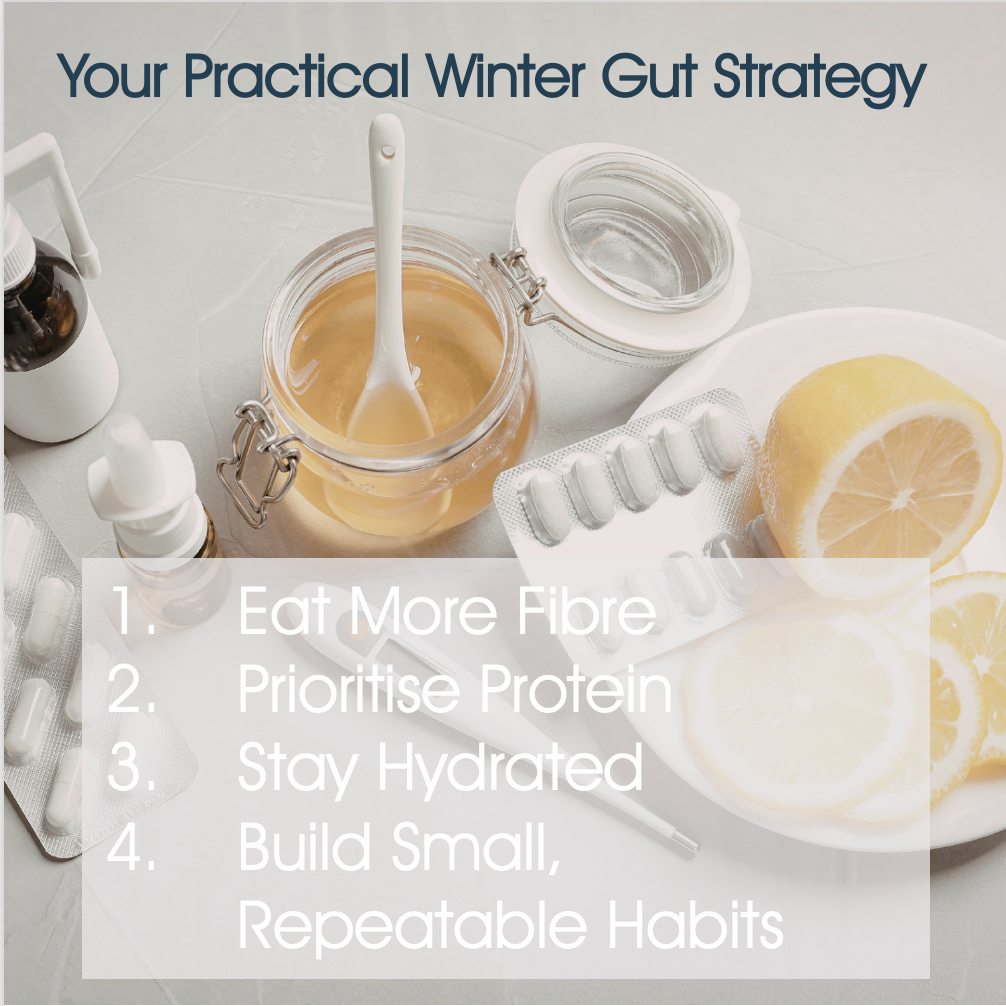
Your Practical Winter Gut Strategy
These are the 4 habits that make the biggest difference, especially for people following a low fodmap diet.
1. Keep feeding and fueling your gut with fibre
This is the number one mistake we see. When people feel tired, stressed or unwell, they eat less fibre. But your gut bacteria still need fuel. Low fodmap fibre options include: oats, chia seeds, kiwifruit, carrots, firm banana and partially hydrolysed guar gum (PHGG). Small amounts are enough. Consistency matters more than volume.
2. Prioritise protein
Protein supports immune cells, muscle strength and recovery after illness. And this becomes more important over 40. Simple low fodmap protein options include: eggs, chicken, fish, Greek yoghurt, tofu and lean meat. Aim for a protein source at each main meal. Not perfection. Just consistency.
3. Keep drinking water
It’s easy to tell when you need to rehydrate in Summer. The more you sweat, the thirstier you feel, the more often you drink. But when there’s less visual and physical cues, we drink less. In fact, people tend to feel 40% less thirsty during winter so they drink less. Keep your water habit going all winter!
4. Focus on small, repeatable behaviours
You don’t need a full routine overhaul. Just one reliable action. For example:
adding fibre to your breakfast
eating protein at lunch
setting a reminder on your phone to drink more water
setting your caffeine ceiling 1 hour earlier (yes, I do struggle with this one but like daylight saving, I’ve readjusted my clock so that my last caffeine hit is before 2pm).
Small habits build stability.
Key Takeaways
Right now in Australia:
COVID levels are relatively stable
Flu is still circulating
Last year’s season was unusually large
Experts expect a more typical season this winter but preparation still matters
And here’s the key message. Winter wellness doesn’t start when you get sick. It starts with:
feeding your gut bacteria FIBRE
prioritising PROTEIN intake
maintaining your WATER habit
building CONSISTENT habits
Want to read the latest surveillance report from the Centre for Disease Control? https://www.cdc.gov.au/sites/default/files/2026-01/australian-respiratory-surveillance-report-29-december-2025-to-25-january-2026.pdf