
What I’d do Differently if I was Diagnosed with IBS Today
As someone who has lived with IBS for more than 30 years, I always laugh when IBS Awareness Month rolls around. As if there’s ever a month when I’m not aware of my IBS! But it did get me thinking…
There’s a trend on social media at the moment: “What I’d do if I was starting again.” And honestly, if I were diagnosed with IBS today, in a world full of gut health influencers, conflicting advice, wellness marketing and TikTok “experts”, I would do a lot of things differently.
Not because I have all the answers now. But because I know how easy it is to lose years to confusion, self-doubt and bad advice. So, for IBS Awareness Month, here’s what I’d do differently if I was newly diagnosed with IBS today.

1. I would trust my gut instead of ignoring my symptoms
Like many people, I lived with gut symptoms for years before I was officially diagnosed with IBS. Growing up, there was always a tub of Mylanta sitting on my mum’s kitchen bench and a packet of Imodium in her handbag. They were just… there. Part of the furniture. So I came to believe that bloating, pain, constipation, heartburn and a “sensitive stomach” were all just normal parts of life. Uncomfortable, yes. Inconvenient, definitely. But normal.
That normalisation is powerful.
When symptoms become part of your everyday life, you stop seeing them for what they are. You push through. You adapt. You tell yourself you’re just a stress-head or hypersensitive. You get used to cancelling plans, wearing stretchy pants and mentally mapping where the nearest toilet is.
If I had my time again, I would tell myself this much earlier: persistent gut symptoms are not normal just because they’re common.
Even if the symptoms don’t fit into one nice, neat box. Even if it takes time to untangle IBS from GERD (or something else). Even if other people in your family seem to have the same issues. I would seek answers for ME sooner, and I would spend less time convincing myself that IBS was just something I had to live with.
2. I would see a GP but I wouldn’t stop there
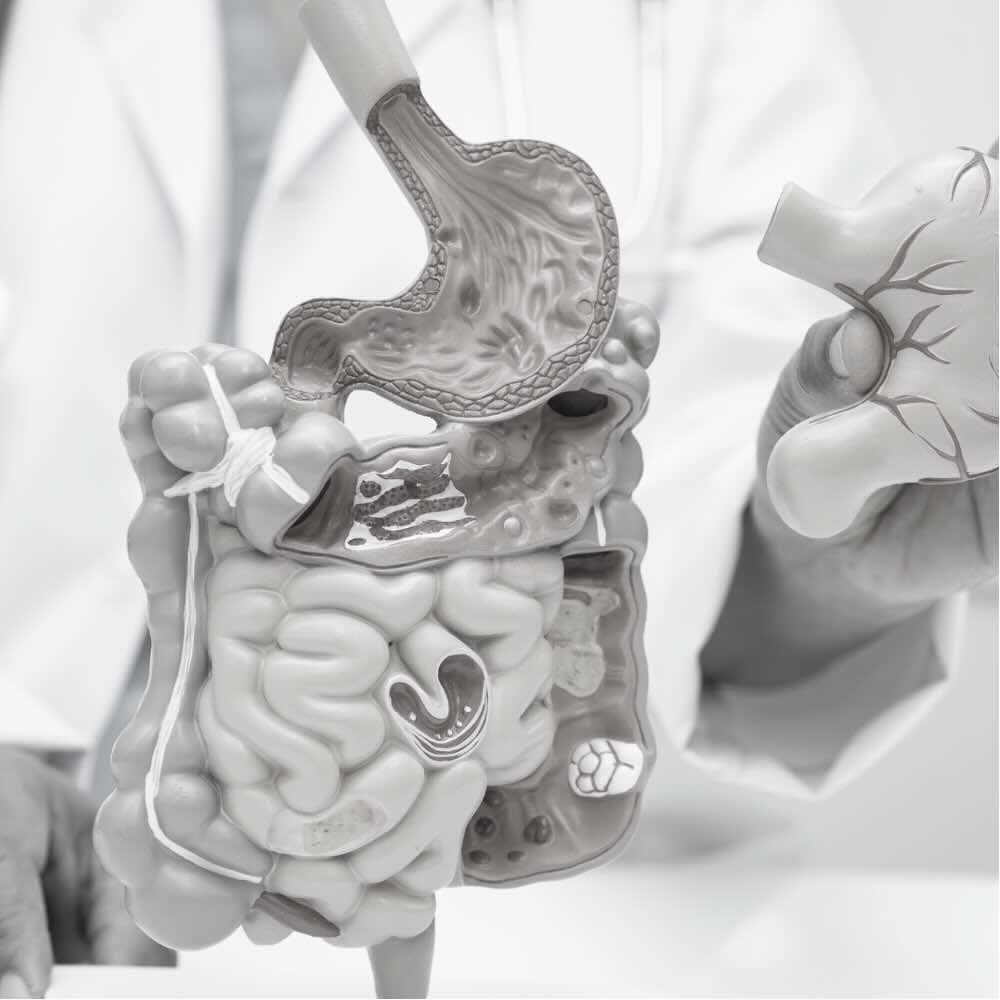
When I finally worked up the courage to talk to my GP, I was referred to a gastroenterologist for a colonoscopy. And then came the frustrating part that so many people with IBS know well: everything “looked fine.” No dramatic findings. No obvious explanation. Nothing structurally wrong.
And yet I was still bloated. Still uncomfortable. Still trying to live a normal life around symptoms that were anything but normal.
If I were starting over today, I would still absolutely see a GP and get properly assessed. That matters. But I wouldn’t stop at hearing that nothing sinister had been found. I would ask the next question sooner: “Okay, so how do I actually manage this?”
That’s the gap so many people fall into. Being told your tests are normal can be reassuring, but it can also feel deflating when you’re still the one living in a body that hurts, bloats, churns or rebels after meals.
That uncertainty sent me into a tailspin. I went looking for answers everywhere - naturopaths, nutritionists, kinesiologists, acupuncturists, chiropractors and more. Some helped. Some didn’t. Some just added to the noise.
IBS is incredibly common, but prevalence varies depending on how you measure it. One Australian survey suggested around 30% of adults report symptoms consistent with IBS, while a much smaller proportion (4.4%) meet the stricter Rome IV criteria. Either way, a lot of Australians are living with gut health symptoms and confused about how to manage them.
If I had my time again, I’d spend less energy on the diagnosis and more time building a practical and targeted symptom management plan.
3. I wouldn’t take nutrition advice from whoever shouts loudest online
One thing I’m (almost) grateful for is that I wasn’t diagnosed with IBS in the full chaos of modern social media. There has never been more information about gut health available online. Unfortunately, there has also never been more misinformation.
Every day I see advice pushing:
unnecessary elimination diets,
detoxes and cleanses,
“gut reset” programs,
anti-bloat teas,
parasite protocols,
supplement stacks,
and vague promises to “heal your gut” or worse, “cure your IBS”.
A lot of this content is persuasive because it’s designed by flashy marketing gurus. It’s simple. It’s confident. It gives you someone to blame and a quick fix to buy.
But confidence is not the same as credibility.
If I were diagnosed with IBS today, I would be much more cautious about taking health advice from the loudest person online. I would look for IBS-specific companies and health providers who use scientific evidence rather than fear. And ALWAYS ASK FOR PUBLISHED CLINICAL EVIDENCE that the product someone is trying to sell you has been tested in IBS patients.
4. I wouldn’t start by cutting out everything
This is the part where I can laugh now, but at the time it was miserable.
In the lead-up to my wedding, I wanted so badly to be symptom-free on the day that I stripped my diet back to almost nothing. For nine months, I cut out dairy, gluten, sugar, onion, garlic, coffee, alcohol and meat. I was basically living on chicken and rice.
I wasn’t thriving. I was surviving. And I was so scared of symptoms that I convinced myself the restriction was worth it. I was 69kgs (underweight for someone 185cm) and miserable.
In hindsight, it was far too extreme. There was no clear structure, no proper reintroduction plan, and no real end date in sight. Just a shrinking list of “safe” foods and a growing fear of everything else.
If I were diagnosed with IBS today, I would remind myself that more restriction is not better management. And that IBS hits whether you’re 69kgs or 100+kgs. Yes, I’m a massive fan of the low fodmap diet due to its efficacy and yes this does involve temporary restriction… but after working out what triggers my IBS, I’m far less restrictive in my dietary choices than ever before.
5. I would learn the difference between “gut-friendly” marketing and actual evidence
If there is one thing the wellness industry does exceptionally well, it is making products sound essential. Probiotic drinks. Peptides. Gut repair supplements. Digestive enzymes. Bloating capsules. Clean protein bars. Wellness teas.
Some of these products may have a place for some people. But not everything marketed for “gut health” is useful for IBS symptoms specifically. That distinction matters.
IBS is not just a vague feeling of being a bit bloated sometimes. It is a complex disorder of gut-brain interaction, with real symptoms and real impacts on daily life. So I would be much more sceptical of broad claims and much more interested in questions like:
· Has this ingredient actually been studied in IBS patients?
· Is it a clinically relevant dose?
· What evidence is there to indicate that this will help my symptoms?
· Or is it just being sold with good branding and a lot of wellness language?
If I had my time again, I would trust science earlier. And if you’re not sure about the health claims that a food product is making - check that they’ve notified FSANZ (Food Standards Australia & New Zealand) - or the relevant body in your country. And if anyone claims to have an IBS cure, I’d just keep scrolling.
6. I would get help from a dietitian earlier
I don’t even want to think about how much money I’ve spent over the years trying to “fix” my gut.
At various times, my pantry has looked like a graveyard of gut health miracles. Powders, capsules, tonics, tinctures, things that promised balance, repair, reset, restore. Most of them ended up in the bin.
Seeing a dietitian who actually understood IBS made all the difference. Instead of guessing, second-guessing, and trying random fixes, I had a structured plan.
If I were diagnosed with IBS today, I would find a fodmap-trained dietitian on Monash University’s website. Here’s the link to a searchable database so you can find an accredited dietitian near you.
7. I would focus on consistency, not perfection
This may be the biggest lesson of all. For years, I thought the answer to IBS was finding the ONE thing. The ONE protocol. The ONE food to avoid. The ONE breakthrough that would finally make everything settle down.
But for me, IBS has never really worked like that.
What has helped is not perfection. It’s consistency.
Regular meals. Fibre that I tolerate well. Enough water. Sleep. Movement. Stress management. Knowing my fodmap triggers. Being realistic. Paying attention. Getting back to basics when things flare.
None of that is sexy content for social media. But it’s the multi-dimensional approach that actually works.
If I were diagnosed with IBS today, I would stop chasing a miracle cure and start building repeatable habits sooner.
Living with IBS shouldn’t mean just putting up with it
IBS is common, but common does not mean trivial and it certainly doesn’t mean you should just put up with it. No, there isn’t a cure. But there are absolutely strategies that can reduce symptoms and make daily life easier.
If you’ve been brushing off your symptoms or trying to figure it all out alone, IBS Awareness Month is a good time to take the next step. Speak to your GP, find a dietitian who understands IBS, and know that your symptoms are real, even if they’ve been dismissed before.
If I could go back and tell my younger self one thing, it would be this: you do not need to wait until things get worse to take your symptoms seriously.
And you do not need to navigate IBS by yourself, armed only with Google, fear and a very bland plate of chicken and rice.